
🐱 Introduction
Cat pregnancy is a natural but delicate process that every pet owner should understand carefully. From early signs to labor stages, knowing the feline gestation timeline helps ensure a healthy birth. This guide explains cat pregnancy week by week, first-time delivery, and stray cat pregnancy signs so you can provide better care, nutrition, and a safe environment for mother cats.
Early Signs a Cat Is Pregnant
A cat pregnancy often begins with subtle behavioral and physical changes known as early feline gestation signs. During the first few weeks, a queen cat may show appetite changes, mild lethargy, and nipple enlargement. These are important indicators of early pregnancy detection and require careful observation by responsible pet owners.
In veterinary practice, early pregnancy signs are linked to hormonal changes after mating. A pregnant cat may also become more affectionate or unusually quiet. These behavioral shifts are part of the feline reproductive cycle. Monitoring cat prenatal health early helps ensure proper kitten development and reduces complications during later stages of gestation.
- 🐱 Appetite increases or decreases suddenly
- 🍼 Nipples become pink and swollen
- 😴 Cat sleeps more than usual
- ❤️ Becomes extra affectionate or distant
- 🚫 Avoids rough play or jumping
- 🐾 Slight weight gain begins early
- 👀 More calm and observant behavior
- 🍽️ Eats small frequent meals
- 🏡 Prefers quiet hidden places
- ⚠️ Needs early veterinary confirmation
Veterinary Advice: Early ultrasound or palpation after 3 weeks confirms pregnancy safely. Avoid giving medications without vet approval.
Owner Experience: My own cat started hiding under the bed and eating more fish than usual—within 4 weeks we confirmed she was pregnant.
Pregnant Cat Week by Week Pictures
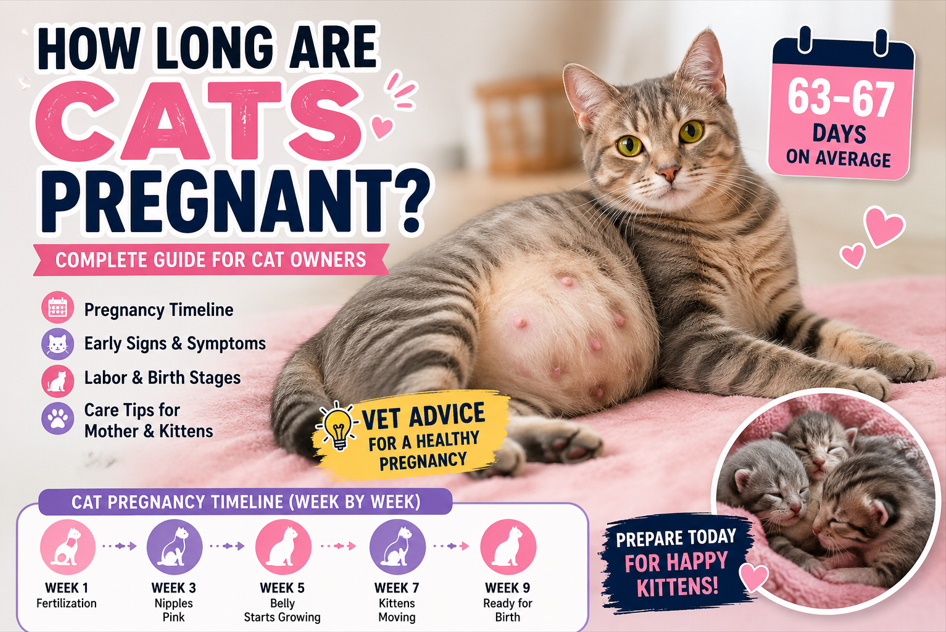
The feline pregnancy timeline lasts about 63–67 days and changes week by week. In early weeks, embryos form; mid-stage shows belly growth; and final weeks show nesting behavior. Week-by-week progression helps owners understand kitten development stages and prepare for safe delivery and proper cat prenatal care.
Veterinarians often use week-based tracking to monitor queen cat pregnancy. By week 5, fetal movement becomes detectable. By week 8, kittens are fully developed. Visual changes help in diagnosing normal vs. risky pregnancies. Regular vet visits ensure healthy fetal growth and prevent complications during the gestation period.
- 📅 Week 1–2: Fertilization begins
- 🧬 Week 3: Embryo implantation
- 🐾 Week 4: Nipple color change
- 🍽️ Week 5: Appetite increases
- 🐱 Week 6: Belly expansion starts
- 🩺 Week 7: Vet detects kittens
- 🍼 Week 8: Fur develops in kittens
- 🏠 Week 9: Nesting behavior starts
- 😺 Movement visible in belly
- ⚠️ Final stage needs monitoring
Veterinary Advice: Ultrasound between week 3–4 gives accurate pregnancy confirmation.
Owner Experience: I once compared weekly photos of my cat and was amazed how quickly her belly changed after week 5.
How Many Times Can a Cat Get Pregnant in a Year
A female cat can become pregnant multiple times a year due to its polyestrous reproductive cycle. Typically, a queen cat may go into heat every 2–3 weeks during breeding season, allowing up to 2–3 litters annually if not spayed. This makes cat population control extremely important.
From a veterinary perspective, frequent pregnancies can weaken a cat’s body and reduce lifespan quality. Continuous breeding affects calcium levels, immunity, and overall feline health. Responsible pet ownership includes controlling reproduction through spaying, which prevents repeated feline gestation cycles and ensures long-term wellbeing of domestic cats.
- 🔁 Heat cycle repeats every few weeks
- 🐱 Can have 2–3 litters yearly
- ⚠️ Overbreeding causes health risks
- 🍼 Each litter has 3–6 kittens
- 🏥 Spaying prevents unwanted pregnancy
- 🍽️ Nutrition demand increases heavily
- 😿 Weakens immune system over time
- 🧬 Hormonal imbalance may occur
- 🚫 Stray cat overpopulation risk rises
- ❤️ Responsible ownership is essential
Veterinary Advice: Spaying after 5–6 months is safest to prevent repeated pregnancies and reproductive diseases.
Owner Experience: A stray cat near my home delivered kittens twice in one season, showing how fast feline reproduction happens.
Pregnant Cat Belly Stages
The pregnant cat belly stages reflect kitten growth inside the womb. Early stages show slight firmness, mid-stages reveal noticeable abdominal enlargement, and late stages show a round, heavy belly. These changes are key indicators of feline pregnancy progression and help owners track healthy gestational development.
Veterinary experts explain that belly growth depends on litter size and cat breed. By week 6, abdominal palpation can confirm kittens. Proper nutrition, calcium support, and stress-free environment are crucial for healthy fetal development. Monitoring belly stages helps prevent complications during advanced pregnancy phases.
- 🐾 Early belly is slightly firm
- 🍽️ Appetite increases steadily
- 🐱 Mid-stage shows clear swelling
- 🍼 Kittens grow rapidly inside
- 🏠 Cat prefers resting areas
- 😴 More sleep in later stages
- ⚖️ Weight gain becomes visible
- 🩺 Vet can feel kittens
- 🚼 Movement visible in belly
- ⚠️ Final stage needs care
Veterinary Advice: Avoid pressing the belly; only trained vets should perform fetal checks.
Owner Experience: My cat’s belly changed shape so quickly in the 6th week that it surprised everyone at home.
How Long Are Cats Pregnant Before Birth
Cats are typically pregnant for 63 to 67 days, though slight variations can occur depending on breed, health, and litter size. This feline gestation period includes embryo development, fetal growth, and final preparation for birth. Understanding the timeline helps owners prepare for safe delivery and kitten care.
Veterinarians emphasize that the last week is crucial for nesting behavior and physical preparation. A pregnant cat may become restless, seek isolation, and reduce food intake. Monitoring temperature drop and behavioral changes helps predict labor. Proper prenatal care ensures safe delivery and reduces complications during kitten birth.
- 📆 Pregnancy lasts about 9 weeks
- 🐱 Average 63–67 days duration
- 🏠 Cat starts nesting behavior
- 🍽️ Appetite may decrease before birth
- 😿 Becomes restless or vocal
- 🌡️ Body temperature drops slightly
- 🍼 Milk production begins early
- 🚼 Kittens fully developed at birth
- 🩺 Vet check recommended weekly
- ❤️ Safe environment is essential
Veterinary Advice: Prepare a clean nesting box in advance and keep emergency vet contact ready.
Owner Experience: When my cat reached day 64, she suddenly became quiet and chose a dark corner to give birth peacefully.
Cat Giving Birth for the First Time
A cat giving birth for the first time is called a queening process, and it can be both exciting and stressful for pet owners. First-time labor usually lasts longer because the queen cat is inexperienced. Signs include nesting, restlessness, and frequent grooming of the genital area.
From a veterinary perspective, first-time cat birth should be closely monitored to avoid dystocia (difficult labor). The delivery process usually occurs in three stages: contractions, kitten delivery, and placenta expulsion. Providing a quiet, warm nesting box improves feline maternal behavior and reduces stress during labor.
- 🐱 First-time labor may take longer
- 🏠 Cat looks for quiet nesting place
- 😿 Becomes restless and vocal
- 🍼 Kittens delivered one by one
- ⏳ Labor occurs in 3 stages
- 🍽️ Appetite reduces before birth
- 🧼 Cat cleans herself frequently
- 🐾 Strong contractions begin early
- 🚨 Vet help may be needed
- ❤️ Calm environment is essential
Veterinary Advice: Do not disturb the cat during delivery unless there are signs of distress like prolonged pushing.
Owner Experience: My cat’s first delivery took almost 6 hours, and she preferred a dark corner of the room where she felt safe.
How to Tell If a Stray Cat Is Pregnant
Identifying pregnancy in a stray cat involves observing physical and behavioral changes. A pregnant stray often shows a rounded belly, enlarged nipples, and reduced aggression. These are classic signs of feline pregnancy that help caretakers provide timely support and nutrition for healthy kitten development.
Veterinarians use palpation or ultrasound for confirmation, but in stray cats, observation is key. Stray queens often become more cautious and search for safe shelter. Providing food rich in protein and a calm environment supports fetal growth and reduces stress during gestation.
- 🐱 Rounded and swollen belly
- 🍼 Pink enlarged nipples
- 🍽️ Eats more than usual
- 😺 Becomes less aggressive
- 🏠 Searches for safe shelter
- 🐾 Walks slowly and carefully
- 😴 Sleeps in hidden areas
- ⚠️ Avoids fighting other cats
- 🧬 Weight gain becomes visible
- ❤️ Needs gentle care
Veterinary Advice: If possible, take the stray to a vet for safe pregnancy confirmation and parasite control.
Owner Experience: A stray cat in my neighborhood became very calm and started sleeping under our porch before giving birth to four kittens.
Cat Pregnancy Timeline
The cat pregnancy timeline typically lasts 63–67 days and is divided into three key trimesters. Each stage involves major fetal development changes. Understanding the feline gestation timeline helps owners track health, prepare for birth, and ensure proper prenatal care for kittens and the mother cat.
Veterinarians monitor pregnancy stages through physical exams and ultrasound. Early embryo formation occurs in the first 3 weeks, rapid fetal growth in weeks 4–6, and final development in weeks 7–9. Proper nutrition, stress reduction, and regular checkups are essential for a healthy pregnancy outcome.
- 📅 Week 1–2: Fertilization begins
- 🧬 Week 3: Implantation occurs
- 🍼 Week 4: Nipples change color
- 🍽️ Week 5: Appetite increases
- 🐱 Week 6: Belly starts growing
- 🩺 Week 7: Kittens detectable
- 🐾 Week 8: Fur develops
- 🏠 Week 9: Nesting behavior
- 😺 Pre-birth restlessness
- ⚠️ Labor preparation begins
Veterinary Advice: Regular ultrasound checks ensure fetal health and detect complications early.
Owner Experience: I once tracked my cat’s pregnancy week by week and was amazed at how quickly her behavior and body changed.
How Long Are Cats Pregnant for the First Time
A cat’s first pregnancy lasts almost the same duration as any pregnancy, typically 63–67 days. However, first-time queens may experience slightly longer or more unpredictable labor due to inexperience. Proper care during this time is crucial for safe kitten delivery and maternal health.
Veterinary studies show that first pregnancies require extra monitoring because stress and hormonal imbalance can affect labor. First-time mothers may struggle with nesting or kitten care. Providing a calm environment and veterinary supervision ensures a safe and successful delivery process.
- 📆 Duration: 63–67 days average
- 🐱 Same as repeat pregnancies
- 😿 First labor may be slower
- 🏠 Needs quiet nesting space
- 🍽️ Reduced appetite before birth
- 🍼 Hormonal changes affect behavior
- 🐾 More stress in first pregnancy
- 🚨 Vet supervision recommended
- ❤️ Gentle handling is important
- ⚠️ Watch for labor complications
Veterinary Advice: First-time pregnant cats should be monitored closely during the final week for signs of distress.
Owner Experience: My cat’s first pregnancy felt longer because she was very anxious and kept moving between different hiding spots before labor started.
🐾 Conclusion
Understanding cat pregnancy stages helps owners support queens during the entire 63–67 day gestation period. Whether it is a first-time birth or a stray cat, proper care, nutrition, and veterinary guidance are essential. By recognizing early signs and labor behavior, you can ensure safe delivery and healthy kittens, making the feline reproductive journey stress-free and successful for both cat and owner