
Introduction
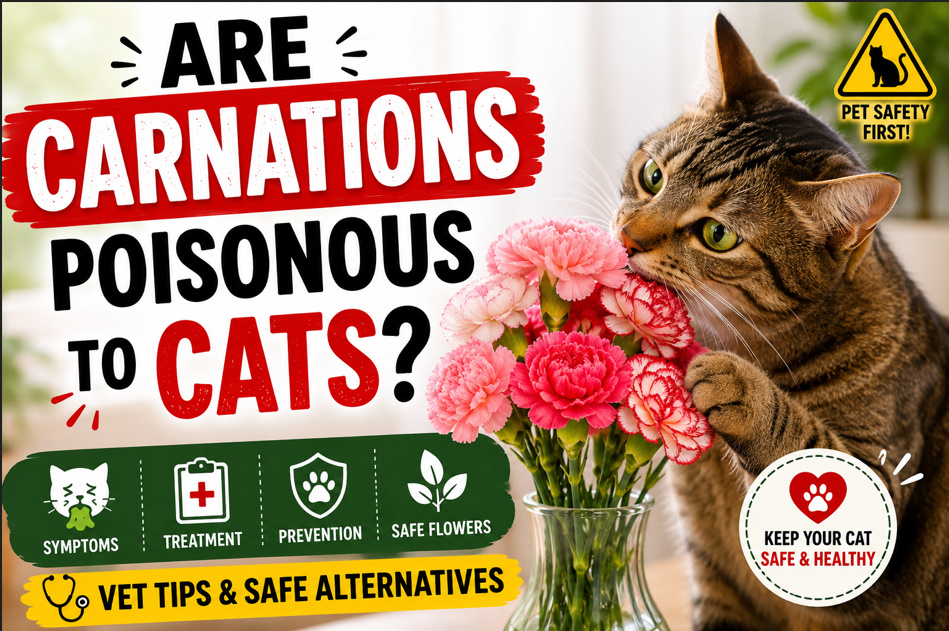
Many cat owners love decorating homes with beautiful flowers, but safety is always a concern. One common question is: are carnations poisonous to cats? This guide explains carnation toxicity, symptoms of cat poisoning, and veterinary advice. You will also learn prevention tips, personal experiences, and safe alternatives to keep your feline friend healthy, happy, and protected from harmful floral exposure at home.
Are Carnations Poisonous to Cats? Overview
Carnations (Dianthus caryophyllus) are considered mildly toxic to cats due to natural compounds called saponins. If a cat chews or eats carnations, it may experience gastrointestinal irritation. While not usually fatal, carnation poisoning can cause discomfort, vomiting, and lethargy in felines, making it important for cat owners to avoid exposure and choose pet-safe flowers instead.
- 🌸 Carnations are mildly toxic to cats
- 🐱 Can cause stomach upset and irritation
- 🚫 Not considered safe for feline ingestion
- 🤢 May trigger vomiting in sensitive cats
- 💧 Exposure happens through chewing petals
- 🏠 Common in home flower bouquets
- ⚠️ Toxicity level is low but risky
- 🧪 Contains natural saponin compounds
- 🐾 Cats are curious about flowers
- 🌿 Not a cat-safe plant choice
- 👨⚕️ Vet advice: avoid indoor carnations
- 🐈 My cat once sniffed bouquet too closely
Toxic Compounds in Carnations
Carnations contain saponins and other mild irritants that affect a cat’s digestive system when ingested. These compounds can lead to feline toxicity symptoms such as drooling and stomach discomfort. Understanding plant-based toxins helps cat owners prevent accidental poisoning and maintain a safe indoor environment with pet-friendly floral arrangements and non-toxic decorative plants.
- 🧪 Contains saponins causing irritation
- 🌿 Plant-based natural chemical defense
- 🐱 Affects cat digestive system
- 🤮 Can trigger vomiting response
- 💦 Causes mild drooling in cats
- ⚠️ Not highly toxic but unsafe
- 🌸 Found in fresh and dried carnations
- 🏠 Common in home flower decor
- 🐾 Cats may chew petals out of curiosity
- 🚫 Avoid planting indoors with pets
- 👨⚕️ Vet advice: keep toxic plants away
- 🐈 I removed carnations after seeing chewing
Symptoms of Carnation Poisoning in Cats
If a cat eats carnations, symptoms usually appear within a few hours. Common signs include vomiting, diarrhea, drooling, and loss of appetite. In rare cases, mild lethargy may occur. Recognizing these symptoms early helps cat owners take quick action and seek veterinary care to prevent complications and ensure feline health and recovery.
- 🤢 Vomiting after chewing flowers
- 💩 Diarrhea or loose stool
- 💧 Excess drooling from mouth
- 🐱 Loss of appetite in cats
- 😴 Mild lethargy or weakness
- 🌸 Pawing at mouth discomfort
- ⚠️ Symptoms appear quickly
- 🏠 Occurs after indoor flower exposure
- 🚫 Avoid letting cats near bouquets
- 🧠 Monitor behavior closely
- 👨⚕️ Vet advice: observe 24 hours
- 🐈 My cat once refused food briefly
What to Do If Cat Eats Carnation
If your cat eats carnations, stay calm and remove any plant material immediately. Offer fresh water and monitor symptoms closely. Contact a veterinarian if vomiting or diarrhea continues. Early intervention is key in preventing dehydration and complications. Most mild cases resolve quickly with supportive care and proper observation at home.
- 🐱 Remove plant from cat area
- 💧 Give fresh clean water
- 👀 Observe behavior changes
- 🤢 Watch for vomiting signs
- 🚫 Do not induce vomiting
- 📞 Call vet if symptoms worsen
- 🏠 Keep cat in safe space
- 🌸 Check remaining flowers
- 🧠 Note time of ingestion
- ⚠️ Act quickly for safety
- 👨⚕️ Vet advice: hydration is important
- 🐈 I called vet once for reassurance
Are Carnations Safe Compared to Other Flowers
Compared to highly toxic plants like lilies, carnations are considered mildly dangerous but still unsafe for cats. Lilies can cause kidney failure, while carnations mainly cause digestive upset. However, “mild toxicity” does not mean safe, so cat owners should still avoid carnations and choose fully non-toxic floral options for homes.
- 🌸 Carnations are mildly toxic only
- ⚠️ Less dangerous than lilies
- 🐱 Still unsafe for cats
- 🚫 Not classified as pet-friendly
- 🌿 Better than highly toxic plants
- 🧪 Causes mild irritation only
- 🏠 Common household bouquet flower
- 🐾 Cats attracted to petals
- 💧 Causes digestive issues only
- 🧠 Safety still required
- 👨⚕️ Vet advice: avoid all toxic plants
- 🐈 I replaced bouquet with safe flowers
Home Risks of Carnation Bouquets
Keeping carnation bouquets at home increases the risk of accidental cat exposure. Curious cats may chew petals or knock over vases, leading to ingestion. Even water in flower vases can sometimes contain toxins. Cat owners should place flowers in inaccessible areas or avoid them entirely to ensure a safe environment.
- 🏠 Bouquets attract curious cats
- 🐱 Cats may chew petals
- 💧 Vase water may be risky
- 🌸 Flowers fall easily to floor
- ⚠️ Accidental ingestion possible
- 🚫 Not safe for indoor pets
- 🧠 Cats explore with mouth
- 🐾 Risk increases at night
- 🪴 Keep flowers out of reach
- 🌿 Use pet-safe decor instead
- 👨⚕️ Vet advice: prevention is best
- 🐈 My cat knocked vase once
Veterinary Treatment for Carnation Poisoning
Veterinary treatment for carnation poisoning is usually supportive. Vets may give anti-nausea medication, fluids, and digestive support. In most cases, recovery is quick if treated early. Severe cases are rare. Always inform your vet about plant exposure so they can provide proper feline toxicity management and safe recovery guidance.
- 👨⚕️ Vet checks symptoms carefully
- 💉 Fluids may be given
- 🤢 Anti-vomiting medicine used
- 🐱 Monitoring vital signs
- 🏥 Usually outpatient treatment
- ⚠️ Severe cases are rare
- 🧪 Diagnosis based on history
- 🌸 Identify plant ingestion
- 💧 Prevent dehydration support
- 🧠 Quick recovery expected
- 🚫 Avoid home medication use
- 🐈 Vet helped my cat recover
Prevention Tips for Cat Owners
Preventing carnation poisoning is easier than treating it. Keep toxic flowers out of your home, use hanging planters, and train cats to avoid plants. Provide cat grass or safe toys to reduce curiosity. Awareness and environmental control are the best strategies for preventing accidental ingestion of harmful ornamental flowers.
- 🚫 Avoid toxic flower purchases
- 🏠 Keep bouquets outside home
- 🪴 Use hanging plant holders
- 🐱 Train cat plant boundaries
- 🌿 Provide cat-safe grass
- 🧠 Reduce curiosity behavior
- 💧 Keep vases inaccessible
- 🌸 Choose non-toxic flowers
- 🐾 Monitor pet behavior
- ⚠️ Prevention reduces risk
- 👨⚕️ Vet advice: safety first always
- 🐈 I now avoid all risky plants
My Experience as a Cat Owner
As a cat owner, I once kept a carnation bouquet at home without knowing the risk. My cat sniffed and tried to bite the petals. I quickly removed it after learning about feline toxicity. This experience taught me the importance of pet-safe plants and constant awareness of indoor environmental hazards.
- 🐱 Cat showed curiosity immediately
- 🌸 Sniffed bouquet closely
- ⚠️ Tried to chew petals
- 🏠 Removed flowers instantly
- 📚 Learned about toxicity later
- 🚫 Felt worried about safety
- 🧠 Increased awareness of plants
- 💧 Checked for symptoms
- 😌 Cat remained healthy luckily
- 🌿 Switched to safe plants
- 👨⚕️ Vet confirmed mild risk
- 🐈 Experience changed my habits
Pet-Safe Flower Alternatives
Instead of carnations, choose pet-safe flowers like roses (without pesticides), orchids, sunflowers, or cat grass. These options reduce toxicity risk while keeping your home beautiful. Always verify plant safety before bringing it indoors. A pet-friendly environment ensures your cat stays safe while you enjoy natural floral decoration.
- 🌹 Safe rose varieties available
- 🌻 Sunflowers are pet-friendly
- 🌿 Cat grass is ideal
- 🌸 Orchids are safe option
- 🐱 No toxic reactions expected
- 🏠 Safe indoor decoration choice
- 🚫 Avoid unknown plants
- 🧠 Always research before buying
- 💧 Wash flowers before use
- 🐾 Keep safety priority
- 👨⚕️ Vet advice: choose non-toxic plants
- 🐈 I now only buy safe flowers
Conclusion
Carnations are mildly toxic to cats and can cause digestive issues like vomiting and drooling if ingested. While not highly dangerous, they are still unsafe for feline households. Cat owners should avoid carnations, recognize symptoms early, and prefer pet-safe plants. Responsible choices, awareness, and veterinary guidance ensure a safe, happy environment for your beloved cat every day at home.