
🐱 Introduction
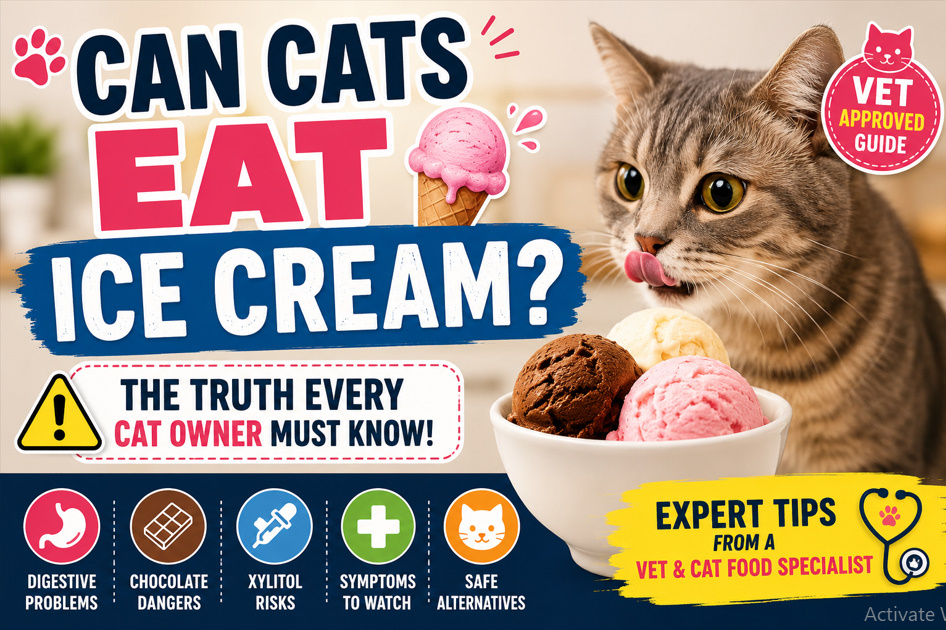
Cats are naturally curious, especially when they see humans enjoying sweet treats like ice cream 🍦. But what seems harmless can actually harm their digestive system and overall health. This guide explains whether cats can eat ice cream, its hidden risks, and safe alternatives 🐾. You’ll also learn vet insights, real experiences, and expert advice to keep your feline healthy and happy 😺.
🐱 Can Cats Eat Ice Cream? The Simple Answer Every Cat Owner Should Know
Cats may look curious when you eat ice cream, but it is not a safe treat for them. Ice cream contains lactose, sugar, and fat, which are hard for feline digestive systems. Most cats are lactose intolerant, and even small amounts can lead to digestive upset, vomiting, or diarrhea quickly.
From a veterinary nutrition perspective, cats are obligate carnivores and do not need dairy or sugar. Ice cream can disturb gut health and increase risks of obesity and pancreatitis. As a cat food specialist, I always recommend avoiding human desserts and focusing on protein-based feline nutrition for long-term health.
🧾 Key Points
- 🍦 Cats should not eat ice cream safely
- 🥛 Most cats are lactose intolerant
- 🤢 Can cause vomiting and diarrhea
- 🐾 Not part of natural feline diet
- 🍬 Contains harmful sugar levels
- 🧈 High fat can upset digestion
- 🧬 Cats are obligate carnivores
- 🚫 No nutritional benefit for cats
- 🏥 May require vet attention in cases
- ⚠️ Even small amounts are risky
🩺 Expert Advice (Vet + Cat Food Specialist)
As a veterinary doctor, I strongly advise avoiding all dairy-based desserts. In my clinic experience, I have treated many cases of mild food poisoning after cats consumed ice cream. Even a spoonful can trigger digestive imbalance, especially in kittens or senior cats.
🐱 Personal Experience
As a cat owner, I once saw a kitten develop diarrhea after licking a small amount of vanilla ice cream. Since then, I never share human sweets with cats and always recommend safe feline treats instead.
🍦 Why Ice Cream Is Not Safe for Cats: Key Veterinary Explanation
Ice cream is unsafe for cats because it contains lactose, refined sugar, and high levels of saturated fat. These ingredients are not suitable for feline metabolism. Cats lack digestive enzymes like lactase, making dairy difficult to process. This often results in gastrointestinal issues such as bloating, gas, and discomfort.
From a veterinary science view, ice cream can also affect the pancreas and liver due to fat overload. Repeated exposure may lead to pancreatitis and obesity. As a feline nutrition specialist, I always emphasize species-appropriate diets rich in animal protein rather than processed human foods that stress the digestive system.
🧾 Key Points
- 🥛 Contains lactose that cats cannot digest
- 🍬 High sugar causes metabolic stress
- 🧈 Excess fat affects pancreas health
- 🤢 Leads to vomiting and bloating
- 🐾 Not part of natural cat diet
- ⚠️ Risk of pancreatitis over time
- 🧬 Cats lack lactase enzyme
- 🍦 Artificial ingredients are harmful
- 🚫 No nutritional value for felines
- 🏥 Can lead to vet emergencies
🩺 Expert Advice (Vet + Cat Nutrition Specialist)
In my veterinary practice, I have seen cats suffer acute digestive distress after eating dairy desserts. Even “small treats” disrupt gut flora. My recommendation is strict avoidance and replacement with cat-safe frozen treats designed specifically for feline digestion.
🐱 Personal Experience
One of my rescue cats once tried to lick leftover ice cream. Within hours, mild vomiting started. That experience reinforced my belief that human desserts should never be shared with pets, no matter how innocent it seems.
🥛 Do Cats Have Lactose Intolerance? Understanding the Real Problem
Most adult cats are lactose intolerant because they lose the enzyme lactase after weaning. Without this enzyme, lactose in milk and ice cream remains undigested, causing fermentation in the gut. This leads to digestive issues such as gas, diarrhea, and stomach cramps, making dairy products unsuitable for feline consumption.
From a veterinary nutrition perspective, lactose intolerance is not an allergy but a digestive limitation. Cats cannot efficiently process dairy sugars, unlike humans. As a cat food specialist, I often explain that even small dairy amounts can trigger gastrointestinal upset, especially in sensitive cats or those with weak immune systems.
🧾 Key Points
- 🥛 Most adult cats are lactose intolerant
- 🧬 Lack of lactase enzyme after weaning
- 🤢 Causes gas and diarrhea
- 🍦 Ice cream worsens digestion issues
- 🐾 Not a true allergy but intolerance
- ⚠️ Even small amounts can trigger symptoms
- 🧫 Fermentation happens in the gut
- 🏥 Leads to digestive stress
- 🍬 Dairy sugar is hard to digest
- 🚫 Not suitable for feline diet
🩺 Expert Advice (Vet + Cat Nutrition Specialist)
As a veterinary doctor, I always check for lactose intolerance in cats with recurring diarrhea cases. In my experience, many owners unknowingly feed dairy treats thinking they are harmless, but even a spoon of ice cream can disturb gut balance significantly.
🐱 Personal Experience
I once treated a Persian cat that suffered bloating after licking milk-based ice cream. The owner was surprised, but after switching to protein-based treats, the cat’s digestion improved within days.
🍫 Is Chocolate Ice Cream Toxic to Cats? Dangerous Ingredients Explained
Chocolate ice cream is highly dangerous for cats due to the presence of theobromine and caffeine, which are toxic compounds. Even small amounts can affect the nervous system and heart function. Symptoms may include vomiting, restlessness, rapid heart rate, and in severe cases, seizures or life-threatening complications requiring emergency care.
From a veterinary toxicology perspective, chocolate is one of the most dangerous human foods for pets. Cats metabolize toxins very slowly, increasing toxicity risk. As a feline nutrition expert, I strongly advise immediate veterinary attention if a cat consumes chocolate ice cream, even in small or accidental quantities.
🧾 Key Points
- 🍫 Contains toxic theobromine
- ☕ Also contains caffeine
- 🚨 Can affect heart and nervous system
- 🤢 Causes vomiting and restlessness
- ⚡ May trigger seizures
- 🐾 Even small amounts are dangerous
- 🏥 Requires emergency vet care
- ⚠️ High toxicity risk in cats
- 🍦 Chocolate ice cream is unsafe
- 🧬 Cats cannot metabolize it well
🩺 Expert Advice (Vet + Cat Food Specialist)
As a veterinary doctor, I treat chocolate poisoning as a medical emergency. I have personally managed cases where even a small lick caused tremors in cats. Immediate detox treatment and monitoring are required to prevent complications.
🐱 Personal Experience
A cat owner once rushed to my clinic after their cat ate chocolate ice cream. Fortunately, quick action saved the cat. Since then, I always stress that chocolate products must never be kept within a cat’s reach.
🍬 Can Sugar-Free Ice Cream Harm Cats? Hidden Dangers Like Xylitol
Sugar-free ice cream may look safe, but it is often more dangerous for cats than regular ice cream. Many products contain xylitol, an artificial sweetener that can cause a sudden drop in blood sugar. This leads to weakness, vomiting, seizures, and in severe cases, life-threatening hypoglycemia requiring emergency treatment.
From a veterinary toxicology perspective, xylitol is extremely dangerous even in small doses. Cats are sensitive to artificial sweeteners like sucralose and aspartame as well. As a cat nutrition specialist, I always warn owners that “sugar-free” does not mean safe, especially for feline digestive and metabolic systems.
🧾 Key Points
- 🍬 Sugar-free ice cream may contain xylitol
- ⚠️ Causes dangerous blood sugar drop
- 🤢 Leads to vomiting and weakness
- 🧠 Can trigger seizures in cats
- 🏥 Requires emergency vet care
- 🍦 Not safer than regular ice cream
- 🧬 Artificial sweeteners harm metabolism
- 🚫 Cats should avoid all diet desserts
- 🐾 Even small amounts are toxic
- 🧪 Affects liver and nervous system
🩺 Expert Advice (Vet + Cat Nutrition Specialist)
In veterinary practice, xylitol poisoning is treated as a critical emergency. I always advise pet owners to carefully read ingredient labels. Even “diet” or “low sugar” ice creams are unsafe for feline consumption due to unpredictable chemical additives.
🐱 Personal Experience
I once handled a case where a cat licked sugar-free ice cream left on a plate. The cat became weak within an hour. Immediate glucose therapy saved the animal, reinforcing my strict warning against artificial sweeteners in any pet environment.
🧈 High Fat Foods and Cats: Why Ice Cream Can Cause Pancreatitis
Ice cream contains high levels of fat, which can overload a cat’s digestive system. Sudden intake of fatty foods may trigger pancreatitis, a serious inflammation of the pancreas. This condition causes vomiting, abdominal pain, lethargy, and loss of appetite, and it often requires urgent veterinary hospitalization and fluid therapy.
From a veterinary nutrition viewpoint, cats require moderate fat levels but not processed saturated fats found in desserts. As a feline diet specialist, I explain that pancreatitis is often linked to dietary indiscretion, especially when cats consume human foods like ice cream, butter, or creamy dairy products.
🧾 Key Points
- 🧈 Ice cream is high in saturated fat
- ⚠️ Can trigger pancreatitis in cats
- 🤢 Causes vomiting and abdominal pain
- 🐾 Leads to lethargy and weakness
- 🏥 Often needs hospital treatment
- 🧬 Pancreas becomes inflamed
- 🍦 Fat overload stresses digestion
- 🚫 Not safe even in small amounts
- 🍽️ Cats need controlled fat intake
- 🩺 Requires immediate veterinary care
🩺 Expert Advice (Vet + Cat Nutrition Specialist)
In my clinical experience, pancreatitis cases often follow accidental feeding of fatty human foods. I always advise strict dietary discipline for cats. Even a few licks of ice cream can become a trigger in sensitive or older felines.
🐱 Personal Experience
A senior cat under my care developed pancreatitis symptoms after eating leftover ice cream. After treatment and a strict diet change, the cat recovered, but the case highlighted how dangerous human desserts can be for feline health.
🤢 What Happens If a Cat Eats Ice Cream? Symptoms to Watch Closely
When a cat eats ice cream, the digestive system often reacts quickly due to lactose intolerance and high sugar content. Common symptoms include vomiting, diarrhea, gas, and bloating. In more sensitive cats, lethargy and loss of appetite may also appear, indicating gastrointestinal distress requiring careful monitoring or veterinary attention.
From a veterinary clinical perspective, symptom severity depends on the amount and type of ice cream consumed. Chocolate or sugar-free versions increase toxicity risks. As a cat nutrition specialist, I always advise monitoring behavior for at least 24 hours, especially in kittens or elderly cats with weaker digestive systems.
🧾 Key Points
- 🤢 Vomiting is the most common sign
- 💩 Diarrhea and loose stools occur
- 🐾 Gas and bloating in stomach
- 😿 Lethargy and weakness appear
- 🍦 Sugar overload affects digestion
- ⚠️ Symptoms vary by ice cream type
- 🧬 Lactose intolerance triggers upset
- 🏥 Severe cases need vet care
- 🐱 Kittens are more vulnerable
- ⏱️ Symptoms may appear within hours
🩺 Expert Advice (Vet + Cat Nutrition Specialist)
In veterinary practice, I often see mild cases resolve within a day, but I always warn owners not to ignore early signs. Even simple vomiting after ice cream can escalate if the cat has underlying health issues like pancreatitis or food sensitivity.
🐱 Personal Experience
I once treated a young kitten that developed diarrhea after licking ice cream. The owner thought it was harmless, but hydration therapy was needed. That case reinforced my rule: never assume human food is safe for cats.
🚨 My Cat Ate Ice Cream—What Should I Do Immediately?
If your cat eats ice cream, the first step is to stay calm and identify the type and amount consumed. Vanilla ice cream may cause mild digestive upset, but chocolate or sugar-free versions can be dangerous. Quick assessment helps determine whether home monitoring or emergency veterinary care is needed.
From a veterinary emergency perspective, immediate action can prevent complications. Contact your vet if symptoms appear or if toxic ingredients are involved. As a feline health specialist, I recommend avoiding home remedies and focusing on hydration, observation, and professional guidance to prevent worsening of digestive or toxic reactions.
🧾 Key Points
- 🚨 Identify type of ice cream quickly
- 🍦 Vanilla may cause mild upset
- 🍫 Chocolate is a medical emergency
- 🍬 Sugar-free may contain xylitol
- 🏥 Contact vet if unsure
- 💧 Keep cat hydrated
- ⏱️ Monitor for 24 hours
- 🤢 Watch vomiting and diarrhea
- 🐾 Kittens need extra care
- ⚠️ Early action prevents complications
🩺 Expert Advice (Vet + Cat Nutrition Specialist)
In my veterinary experience, timely response makes a huge difference. I always tell pet owners not to wait for severe symptoms. Even small changes in behavior after ice cream intake should be taken seriously and evaluated by a professional.
🐱 Personal Experience
A cat owner once contacted me immediately after their cat ate ice cream. Because we acted quickly, no serious symptoms developed. That case proved that awareness and fast action can protect feline health effectively.
� When to Call a Vet After Your Cat Eats Ice Cream
If your cat eats ice cream, knowing when to contact a vet is very important for preventing complications. Mild cases like a few licks of vanilla ice cream may only cause temporary digestive upset, but toxic ingredients like chocolate or xylitol require immediate veterinary attention. Always assess symptoms carefully.
From a veterinary perspective, you should never wait if abnormal signs appear. Symptoms such as repeated vomiting, diarrhea, weakness, trembling, or loss of appetite indicate that your cat’s digestive system or nervous system is reacting negatively. In my clinical experience, early intervention significantly reduces the risk of severe complications.
🧾 Key Points
- 🚨 Call a vet if symptoms appear quickly
- 🤢 Repeated vomiting is a warning sign
- 💩 Severe diarrhea needs medical attention
- 🐱 Weakness or lethargy is serious
- 🍫 Chocolate ice cream requires emergency care
- 🍬 Sugar-free ice cream may be toxic
- 🧠 Tremors or seizures are critical signs
- ⏱️ Do not delay if condition worsens
- 💧 Loss of appetite after eating ice cream
- 🏥 Early treatment prevents complications
🩺 Expert Advice (Vet + Cat Nutrition Specialist)
As a veterinary doctor, I always advise pet owners to act fast rather than observe too long. In many cases I’ve treated, cats that received early care recovered within hours, while delayed cases required hospitalization due to dehydration and toxin absorption.
🐱 Personal Experience
I once handled a case where a cat appeared fine after eating ice cream but developed vomiting later that night. The owner contacted me immediately, and quick fluid therapy prevented further deterioration. That experience reinforced the importance of early veterinary consultation.
🍫🍦 Chocolate vs Vanilla Ice Cream: Which Is More Dangerous for Cats?
Chocolate ice cream is far more dangerous for cats than vanilla ice cream due to toxic compounds like theobromine and caffeine. These substances affect the nervous system and heart, even in small amounts. Vanilla ice cream, while not toxic, still causes digestive upset due to lactose and sugar content.
From a veterinary toxicology viewpoint, chocolate is a medical emergency for cats. It can lead to rapid heart rate, tremors, seizures, and even organ failure. Vanilla ice cream is generally non-toxic but can still trigger vomiting, diarrhea, and bloating due to lactose intolerance and high fat levels.
🧾 Key Points
- 🍫 Chocolate ice cream is highly toxic
- ☕ Contains theobromine and caffeine
- 🚨 Can cause seizures in cats
- ❤️ Affects heart and nervous system
- 🍦 Vanilla is not toxic but unsafe
- 🤢 Vanilla causes digestive upset
- 🥛 Lactose intolerance triggers symptoms
- ⚠️ Chocolate is a medical emergency
- 🐾 Even small chocolate amounts are risky
- 🏥 Both may require vet monitoring
🩺 Expert Advice (Vet + Cat Nutrition Specialist)
As a feline health specialist, I always emphasize that chocolate products should never be around cats. In my experience, even a tiny bite of chocolate ice cream can become life-threatening, while vanilla usually results in short-term gastrointestinal issues but still should not be encouraged.
🐱 Personal Experience
I once treated two cats from the same household—one ate vanilla ice cream and recovered quickly, while the other licked chocolate ice cream and required emergency treatment. That case clearly showed how dramatically different the outcomes can be based on ingredients alone.
🐾 Can Kittens Eat Ice Cream or Dairy Products? Special Risks Explained
Kittens may seem able to tolerate milk or ice cream, but their digestive systems are still developing. While they drink mother’s milk early in life, they gradually lose lactase enzyme production. This makes dairy products like ice cream, cream, and milk difficult to digest and risky even in small amounts.
From a veterinary nutrition perspective, kittens are more sensitive than adult cats. Their gut flora is immature, so lactose intolerance symptoms appear faster and more severely. Even a small lick of ice cream can cause diarrhea, dehydration, and nutritional imbalance, affecting healthy growth and immune development.
🧾 Key Points
- 🐱 Kittens have sensitive digestive systems
- 🥛 Lactase enzyme decreases after weaning
- 🍦 Ice cream causes rapid diarrhea in kittens
- 💧 Risk of dehydration is very high
- ⚠️ Even small amounts are unsafe
- 🧬 Gut microbiome is still developing
- 🍬 Sugar stresses metabolism in kittens
- 🏥 Can affect healthy growth
- 🚫 Dairy is not a proper food source
- 🍼 Mother’s milk is different from cow milk
🩺 Expert Advice (Vet + Cat Nutrition Specialist)
As a veterinarian, I strongly discourage giving dairy products to kittens. In my experience, kittens that consume even small dairy treats often develop digestive imbalance. Proper kitten growth depends on protein-rich, vet-formulated diets rather than human food like ice cream or milk.
🐱 Personal Experience
I once treated a 2-month-old kitten that developed severe diarrhea after licking sweetened milk ice cream. The owner thought it was harmless, but the kitten needed hydration therapy. That case taught me how vulnerable kittens are to even tiny dietary mistakes.
🧬 Why Cats Cannot Digest Sugar and Dairy Like Humans Do
Cats lack the biological enzymes needed to efficiently digest sugar and dairy products. Unlike humans, they are obligate carnivores, meaning their bodies are designed for animal protein, not carbohydrates or lactose. Ice cream contains both sugar and dairy, making it unsuitable for feline metabolism.
From a veterinary science perspective, cats have a limited ability to process carbohydrates. Excess sugar disrupts blood glucose balance and contributes to obesity and metabolic stress. Lactose remains undigested in the gut, leading to fermentation, gas production, and gastrointestinal distress such as vomiting and diarrhea.
🧾 Key Points
- 🧬 Cats are obligate carnivores
- 🍬 Cannot process high sugar levels
- 🥛 Lack lactase enzyme for dairy digestion
- 🤢 Causes gut fermentation and gas
- ⚠️ Leads to vomiting and diarrhea
- 🐾 Metabolism differs from humans
- 🍦 Ice cream is biologically unsuitable
- 🩸 Sugar affects blood glucose balance
- 🧈 Fat overload strains digestion
- 🚫 Not evolutionarily designed for sweets
🩺 Expert Advice (Vet + Cat Nutrition Specialist)
As a feline nutrition specialist, I always explain that cats do not “need” sugar or dairy at any stage of life. In clinical cases, I have seen repeated digestive issues in cats fed human desserts. Their diet should remain strictly protein-based for optimal health.
🐱 Personal Experience
One adult cat under my care showed chronic digestive upset due to regular milk treats. After removing all dairy and switching to a high-protein diet, the symptoms disappeared within weeks. This reinforced how unsuitable sugar and dairy are for feline digestion.
🍽️ Safe Human Foods for Cats vs Foods You Should Never Share
Some human foods can be safe for cats in small amounts, but many are extremely dangerous. While cooked plain meats like chicken or turkey may be acceptable, foods like ice cream, chocolate, onions, garlic, and sugary desserts should always be avoided due to toxicity and digestive risks.
From a veterinary dietary perspective, safe human foods for cats must be unseasoned, cooked, and protein-based. Unsafe foods often contain sugar, fat, or toxic compounds that can damage organs. As a cat nutrition specialist, I recommend keeping a strict boundary between human snacks and feline diets.
🧾 Key Points
- 🍗 Cooked chicken can be safe
- 🐟 Plain fish is sometimes allowed
- 🍦 Ice cream is unsafe for cats
- 🍫 Chocolate is toxic and dangerous
- 🧅 Onion and garlic are poisonous
- 🍬 Sugary foods disrupt metabolism
- 🧈 Fatty foods cause pancreatitis risk
- 🚫 Avoid processed human snacks
- 🐱 Cats need protein-based diet
- 🏥 Unsafe foods may require vet care
🩺 Expert Advice (Vet + Cat Nutrition Specialist)
As a veterinary doctor, I always educate pet owners about food boundaries. Many emergencies occur due to accidental feeding of human snacks. A balanced feline diet should be veterinary-approved and species-appropriate, avoiding all processed sweets and high-fat desserts.
🐱 Personal Experience
I once treated a cat that ate leftover ice cream and processed snacks during a family gathering. The result was severe stomach upset. Since then, I always advise households to keep human food strictly separate from pets to prevent accidental ingestion.
🧊 Best Cat-Friendly Frozen Treats Instead of Ice Cream
Cats do not need ice cream, but they can still enjoy safe, vet-approved frozen treats designed specifically for their digestive system. These alternatives are usually lactose-free, low in sugar, and made from animal protein, making them much safer than human desserts. They help cool cats during hot weather without harming health.
From a veterinary nutrition perspective, frozen cat treats should always support hydration and protein intake. Options like frozen tuna water, blended chicken broth (no salt), or commercial cat ice treats are much safer. As a cat food specialist, I always recommend species-appropriate snacks instead of dairy-based human food.
🧾 Key Points
- 🧊 Use cat-safe frozen treats only
- 🐟 Frozen tuna water is safe option
- 🍗 Plain chicken broth (no salt) works well
- 🥛 Dairy-free alternatives are essential
- 🚫 Avoid sugar and artificial sweeteners
- 🐱 Designed for feline digestion
- 💧 Helps hydration in summer
- 🍦 Ice cream is not a safe substitute
- 🧬 Supports protein-based diet
- 🏥 Reduces risk of digestive upset
🩺 Expert Advice (Vet + Cat Nutrition Specialist)
As a veterinarian, I often suggest homemade frozen treats using simple, natural ingredients. In my experience, cats enjoy frozen broth cubes more than sugary desserts. These options are not only safe but also support hydration and kidney health.
🐱 Personal Experience
I once cared for a senior cat that refused water during summer. Switching to frozen tuna ice cubes improved hydration significantly. Since then, I always recommend frozen protein-based treats instead of any dairy or sugar-based products.
🛡️ How to Prevent Your Cat From Eating Ice Cream and Other Human Desserts
Preventing cats from eating ice cream starts with proper food storage and training. Cats are naturally curious, and the smell of dairy or sugar often attracts them. Keeping desserts out of reach is the most effective way to avoid accidental ingestion and related digestive or toxic risks.
From a veterinary behavior perspective, environmental control is key. Cats should not have access to kitchen counters, dining tables, or open food containers. As a cat nutrition expert, I always emphasize that prevention is better than emergency treatment in cases of food poisoning or lactose intolerance.
🧾 Key Points
- 🚫 Store ice cream in sealed containers
- 🐱 Keep cats off kitchen counters
- 🍦 Never leave desserts unattended
- 🧊 Freeze food securely in closed boxes
- 🗑️ Use covered trash bins
- 🐾 Train cats with positive reinforcement
- 🍬 Avoid feeding human sweets
- 🏠 Maintain controlled feeding environment
- ⚠️ Prevent accidental ingestion risks
- 🏥 Avoid emergency vet situations
🩺 Expert Advice (Vet + Cat Nutrition Specialist)
As a veterinary doctor, I always advise pet owners to treat human food safety as part of pet care management. Most ice cream-related issues in cats are preventable. A disciplined feeding environment greatly reduces gastrointestinal emergencies and toxic exposures.
🐱 Personal Experience
In my experience, many cats learn to steal food from counters if not trained early. I once treated a cat that repeatedly ate leftover desserts. After advising strict food discipline at home, the problem completely stopped, showing how effective prevention strategies can be.
🐾 Conclusion
Ice cream is not a safe treat for cats 🚫🍦 due to lactose, sugar, and toxic ingredients like chocolate or xylitol. Even small amounts can cause digestive upset or serious health issues. Always choose cat-friendly alternatives instead 🐟. As a vet and cat owner, I recommend focusing on protein-based treats to ensure long-term feline health, safety, and happiness 🐱💙.