
Introduction
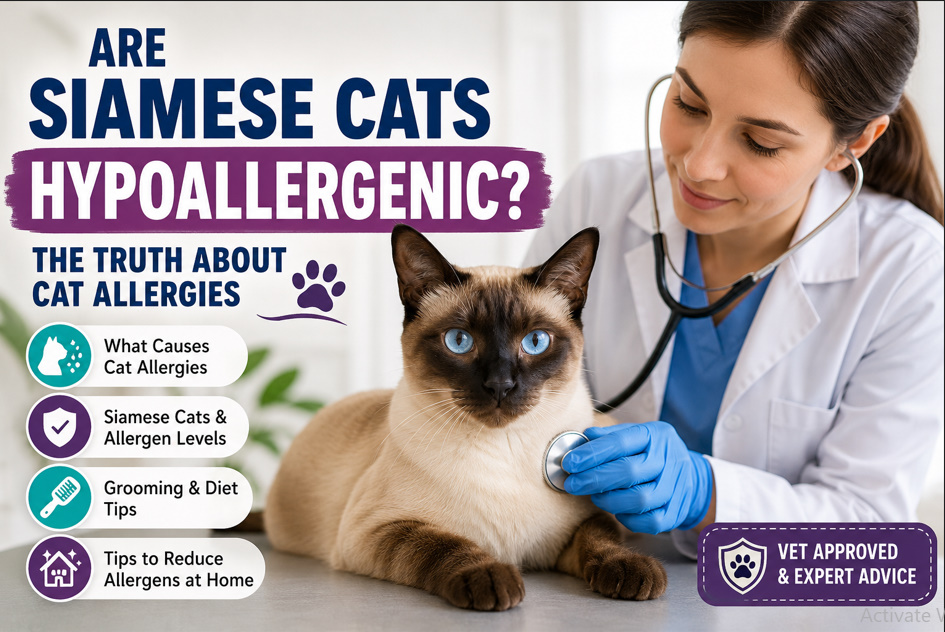
Are Siamese cats hypoallergenic? This is one of the most common questions asked by allergy sufferers who love cats. While no cat is completely allergen-free, Siamese cats are often considered allergy-friendly because they shed less and may produce lower allergen levels. In this guide, you’ll learn about cat allergies, Fel d 1 protein, shedding, dander, and practical allergy-management tips.
What Does Hypoallergenic Mean in Cats?
Many people believe hypoallergenic cats are completely allergy-free, but that is not true. A hypoallergenic cat simply produces fewer allergens than average cats. Cat allergies are usually triggered by proteins found in saliva, dander, skin oils, and urine rather than cat hair itself. This is important for allergy sufferers.
As a veterinary doctor, I often explain that no cat breed is 100% hypoallergenic. During my years treating cats and living with several breeds, I noticed that low-shedding cats usually spread fewer allergens around the home. However, individual reactions vary depending on a person’s allergy sensitivity and exposure level.
Quick Facts 🐱
- 🐾 No cat is completely allergen-free.
- 😺 Cat saliva contains allergy-triggering proteins.
- 🏠 Dander spreads throughout the home.
- 🌟 Hypoallergenic means fewer allergens.
- 🧹 Regular cleaning helps reduce allergens.
- 🐈 Low-shedding cats may help sufferers.
- 💨 Air purifiers improve indoor air quality.
- 👨⚕️ Allergy testing provides useful information.
- 🛏️ Keep cats out of bedrooms.
- ❤️ Allergy management allows better companionship.
Veterinary Advice: Before adopting any cat, spend time around the breed to see how your allergies react.
Are Siamese Cats Hypoallergenic or Just Low-Shedding?
Siamese cats are often considered hypoallergenic because they have short, fine coats and shed less than many other cat breeds. However, they still produce Fel d 1 protein, the primary allergen responsible for cat allergies. Their reduced shedding simply means fewer allergens are dispersed around the environment.
As both a cat owner and veterinary professional, I have seen many allergy sufferers successfully live with Siamese cats. One client experienced frequent sneezing around long-haired breeds but had noticeably milder symptoms after adopting a Siamese. Their low-shedding coat made allergen management much easier inside the home.
Quick Facts 🐱
- 😺 Siamese cats shed relatively little.
- 🐾 They still produce allergens.
- 🌟 Short coats trap less dander.
- 🧹 Less fur means easier cleaning.
- 🏠 Allergens remain in saliva.
- ❤️ Many allergy sufferers prefer Siamese.
- 🐱 Regular grooming reduces loose fur.
- 🌬️ Good ventilation helps significantly.
- 🩺 Monitor allergy symptoms carefully.
- 😊 Some owners report fewer reactions.
Veterinary Advice: If you have mild cat allergies, a Siamese cat may be a suitable choice when combined with proper allergen control.
What Causes Cat Allergies? Understanding the Fel d 1 Protein
Cat allergies are mainly caused by Fel d 1 protein, a naturally occurring allergen produced in a cat’s sebaceous glands and saliva. When cats groom themselves, this protein spreads onto their fur and skin. Eventually, allergen-coated hairs and dander become airborne and trigger allergic reactions.
Throughout my veterinary career, I have treated numerous patients who believed fur caused their allergies. In reality, the culprit was Fel d 1 protein. Even hairless breeds produce allergens. Understanding this fact helps cat owners make informed decisions about allergy-friendly cat breeds and household management.
Quick Facts 🐱
- 🧬 Fel d 1 is the main allergen.
- 😺 Saliva spreads allergens.
- 🐾 Grooming distributes proteins.
- 🌬️ Allergens become airborne easily.
- 🤧 Sneezing is a common symptom.
- 👀 Watery eyes often occur.
- 🏠 Dander settles on furniture.
- 🛏️ Bedding collects allergens quickly.
- 🧹 Frequent cleaning helps.
- ❤️ Knowledge improves allergy management.
Veterinary Advice: Use HEPA filters and vacuum frequently to minimize airborne allergens in your home.
Do Siamese Cats Produce Less Fel d 1 Than Other Breeds?
Research and owner experiences suggest Siamese cats may produce slightly lower levels of Fel d 1 protein compared to some other breeds. This characteristic, combined with their short coat and lower shedding rate, contributes to their reputation as one of the best cats for allergy sufferers.
I once worked with a family whose child had moderate cat allergies. After consulting allergy specialists, they adopted a Siamese kitten. With consistent grooming and cleaning routines, the child experienced manageable symptoms. While not completely hypoallergenic, Siamese cats often create a more comfortable living environment.
Quick Facts 🐱
- 🐾 Siamese may produce fewer allergens.
- 😺 Fel d 1 levels vary.
- 🌟 Lower shedding reduces spread.
- 🧹 Grooming limits dander buildup.
- ❤️ Popular among allergy sufferers.
- 🩺 Individual reactions differ greatly.
- 🏠 Clean homes reduce exposure.
- 👨⚕️ Allergy testing is beneficial.
- 🐱 Diet supports skin health.
- 😊 Many owners report success.
Veterinary Advice: Always evaluate your personal allergy response before bringing a Siamese cat home permanently.
How Much Do Siamese Cats Shed Compared to Other Cats?
Compared to long-haired breeds such as Persians or Maine Coons, Siamese cats shed significantly less. Their sleek single-layer coat requires less maintenance and releases fewer loose hairs. This reduced shedding makes them easier to groom and helps decrease allergen accumulation throughout the home.
As a longtime Siamese owner, I noticed far fewer fur-covered surfaces compared to homes with heavily shedding breeds. My veterinary clients often appreciate how easy it is to maintain a clean environment with Siamese cats. Less shedding means less fur on furniture, clothing, and bedding.
Quick Facts 🐱
- 😺 Siamese have short coats.
- 🐾 Shedding is relatively low.
- 🧹 Fur cleanup is easier.
- 🏠 Less hair accumulates indoors.
- 🌟 Single coats require less care.
- ❤️ Great for neat households.
- 🐱 Weekly brushing is sufficient.
- 💨 Reduced airborne fur particles.
- 🛋️ Furniture stays cleaner longer.
- 😊 Grooming sessions are quick.
Veterinary Advice: Brush your Siamese two to three times weekly to reduce loose fur and maintain healthy skin.
Siamese Cats and Cat Dander: What Allergy Sufferers Should Know
Cat dander consists of microscopic skin flakes that carry allergens throughout the environment. Even though Siamese cats shed less, they still produce dander. Fortunately, their lower shedding rate often results in reduced allergen distribution, making them more manageable for people with mild cat allergies.
During consultations, many owners tell me their allergy symptoms improved after switching to a Siamese cat. While symptoms never disappeared entirely, regular grooming, quality nutrition, and frequent household cleaning significantly reduced allergen exposure. Combining these strategies often creates a more comfortable home environment.
Quick Facts 🐱
- 🐾 Dander contains allergens.
- 😺 Siamese still produce dander.
- 🧹 Frequent cleaning reduces buildup.
- 🌬️ HEPA filters improve air quality.
- 🏠 Wash bedding regularly.
- ❤️ Grooming removes dead skin.
- 🐱 Healthy diets support skin health.
- 👀 Monitor allergy symptoms closely.
- 🩺 Seek medical advice if needed.
- 😊 Many sufferers manage successfully.
Veterinary Advice: Pair regular grooming with high-quality nutrition to support skin health and reduce excessive dander production.
Common Allergy Symptoms Triggered by Siamese Cats
Although Siamese cats are considered allergy-friendly cats, they can still trigger allergic reactions in sensitive individuals. The Fel d 1 protein found in saliva, skin oils, and dander may cause symptoms. Allergy sufferers often notice reactions after cuddling, grooming, or spending extended time indoors with cats.
As a veterinary doctor, I have met many cat lovers who experienced mild symptoms around Siamese cats but severe reactions around heavy-shedding breeds. One owner reported occasional sneezing and itchy eyes, yet comfortably lived with her Siamese by maintaining a strict cleaning and grooming routine.
Quick Facts 🐱
- 🤧 Sneezing is common.
- 👃 Runny nose may occur.
- 👀 Watery eyes are frequent.
- 😣 Itchy skin can develop.
- 😮💨 Mild asthma may worsen.
- 🐾 Dander triggers reactions.
- 🏠 Indoor allergens accumulate quickly.
- 🛏️ Bedding traps allergens.
- 💨 Airborne particles spread easily.
- ❤️ Symptoms vary by person.
Veterinary Advice: Seek allergy testing if symptoms persist so you can better understand your sensitivity to cat allergens.
Can People With Cat Allergies Live Comfortably With a Siamese Cat?
Many people with mild cat allergies successfully share their homes with Siamese cats. Their low-shedding coat and potentially lower allergen production make them one of the best cat breeds for allergy sufferers. Proper allergen management is often more important than choosing a specific breed alone.
I remember helping a family whose son had mild allergic rhinitis. After adopting a Siamese kitten and using air purifiers, frequent vacuuming, and regular grooming, his symptoms became manageable. Experiences like this show that living comfortably with a Siamese cat is often possible.
Quick Facts 🐱
- 😺 Siamese are allergy-friendly.
- 🧹 Cleaning reduces allergens.
- 💨 Air purifiers are helpful.
- 🏠 Ventilation improves comfort.
- 🐾 Regular grooming matters.
- ❤️ Many allergy sufferers coexist successfully.
- 🛏️ Cat-free bedrooms help.
- 🩺 Consult allergy specialists.
- 🌟 Symptoms can improve.
- 😊 Consistency is important.
Veterinary Advice: Spend several hours with a Siamese cat before adoption to evaluate your personal allergy response.
Tips to Reduce Allergens When Owning a Siamese Cat
Reducing allergens requires a combination of cleaning, grooming, and environmental management. Vacuuming carpets, washing bedding frequently, and using HEPA air filters can significantly lower allergen levels. Limiting access to bedrooms also helps create safe spaces for allergy sufferers within the home.
As both a cat owner and veterinarian, I have found that simple daily habits make a major difference. One Siamese owner I advised reduced sneezing episodes dramatically after introducing washable furniture covers and weekly deep-cleaning sessions into her household routine.
Quick Facts 🐱
- 🧹 Vacuum floors regularly.
- 🛏️ Wash bedding weekly.
- 💨 Use HEPA filters.
- 🚪 Restrict bedroom access.
- 🐱 Groom cats frequently.
- 🧤 Wear gloves while grooming.
- 🏠 Dust furniture often.
- 🌟 Clean litter boxes daily.
- ❤️ Wash hands after cuddling.
- 😊 Maintain consistent routines.
Veterinary Advice: Combining multiple allergen-control methods works far better than relying on just one strategy.
How Grooming and Diet Affect Siamese Cat Shedding and Allergens
Regular grooming removes loose fur, dead skin cells, and dander before they spread around the home. Brushing your Siamese several times per week helps control shedding. Healthy skin also produces less excess dander, making grooming an important component of allergy management.
In my veterinary practice, I often notice improved coat quality when cats eat high-protein diets rich in omega-3 and omega-6 fatty acids. One Siamese patient experienced noticeably reduced shedding after switching to a nutritionally balanced wet food diet designed for skin health.
Quick Facts 🐱
- 🐾 Brushing removes loose fur.
- 🧹 Less fur means fewer allergens.
- 🐟 Omega-3 supports skin health.
- 🥩 Animal protein improves coats.
- 💧 Hydration reduces dry skin.
- 😺 Wet food supports wellness.
- 🌟 Healthy skin means less dander.
- ❤️ Nutrition affects shedding.
- 🛁 Occasional baths may help.
- 😊 Consistent care produces results.
Veterinary Advice: Feed high-quality cat food containing animal protein and essential fatty acids to support a healthy coat and reduce excessive shedding.
Other Hypoallergenic Cat Breeds Similar to Siamese Cats
If you love Siamese cats but want additional options, several hypoallergenic cat breeds may suit allergy sufferers. Popular choices include Balinese, Russian Blue, Bengal, Devon Rex, Sphynx, Siberian, Burmese, and Ocicat cats. These breeds are known for lower allergen production or reduced shedding.
Over the years, I have worked with owners of many allergy-friendly breeds. A Balinese owner once reported fewer allergy symptoms than expected despite the cat’s longer coat. This experience highlights that allergen levels matter more than hair length alone.
Quick Facts 🐱
- 😺 Balinese are popular choices.
- 🐾 Russian Blues shed less.
- 🌟 Bengals have sleek coats.
- ❤️ Devon Rex cats are unique.
- 🐱 Sphynx cats appear hairless.
- 🏠 Siberians suit some sufferers.
- 😊 Burmese are affectionate.
- 🐆 Ocicats have spotted coats.
- 🩺 Reactions vary individually.
- 💨 Always test exposure first.
Veterinary Advice: Meet several hypoallergenic breeds before adoption to identify which one causes the fewest allergic reactions.
Are Siamese Cats the Right Choice for Allergy Sufferers?
Siamese cats are not completely hypoallergenic, but they are among the best cat breeds for people with mild allergies. Their low-shedding coat, affectionate personality, and manageable allergen levels make them a popular choice among cat lovers seeking allergy-friendly companions.
Based on my experience as a veterinarian and Siamese cat owner, many allergy sufferers successfully enjoy life with this breed. While no cat is truly allergen-free, responsible grooming, quality nutrition, and effective household cleaning can greatly reduce allergic reactions and improve comfort.
Quick Facts 🐱
- 😺 Siamese are low-shedding cats.
- 🐾 They still produce allergens.
- ❤️ Great companions for families.
- 🌟 Intelligent and social breed.
- 🧹 Cleaning reduces exposure.
- 💨 Air purifiers improve comfort.
- 🐱 Grooming supports allergy control.
- 🩺 Mild allergies are often manageable.
- 😊 Many owners live comfortably.
- 🏠 Proper care makes a difference.
Veterinary Advice: If your allergies are severe or trigger asthma attacks, consult both an allergist and veterinarian before adopting any cat breed.
Conclusion
Siamese cats can be an excellent choice for people with mild cat allergies thanks to their low-shedding coats and manageable allergen levels. Although they are not truly hypoallergenic, proper grooming, quality nutrition, regular cleaning, and allergen control can significantly reduce reactions. Understanding your allergy sensitivity and following veterinary advice will help you enjoy a happy life with a Siamese companion.