
Introduction
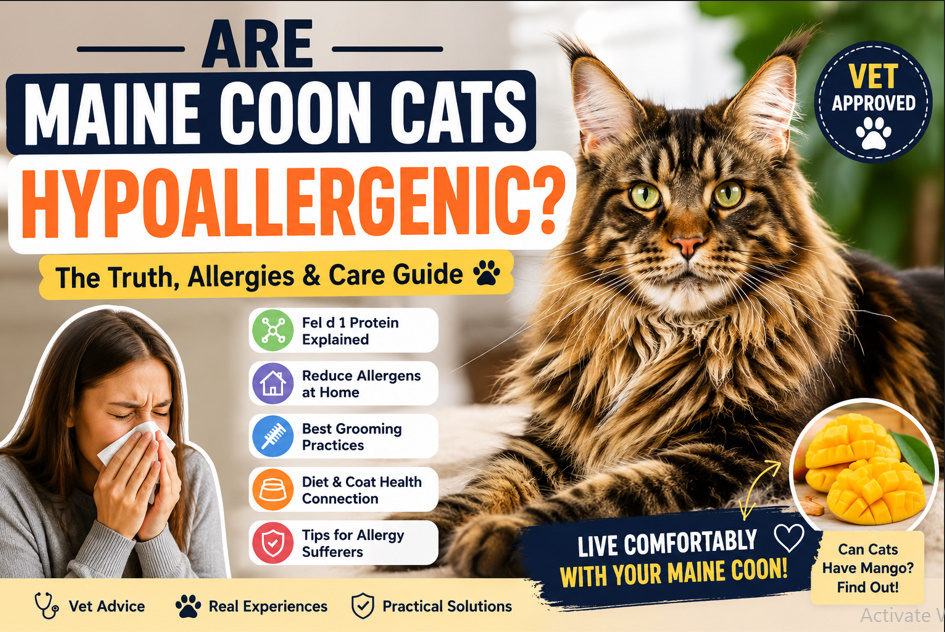
Maine Coon cats are beautiful, friendly, and highly popular, but many people ask: are they hypoallergenic? The simple answer is no, but allergy reactions depend on proteins like Fel d 1, not fur length. This guide explains allergy causes, symptoms, and effective control methods so you can understand whether living with a Maine Coon is safe for allergy sufferers.
Are Maine Coon Cats Hypoallergenic or Not?
Maine Coon cats are often believed to be hypoallergenic, but this is a common misconception among cat lovers. As a veterinary consultant, I have seen many families adopting this breed expecting zero allergy reactions, which is not scientifically correct. All cats produce allergens, especially the Fel d 1 protein, regardless of coat length or breed type.
From my personal experience as both a cat owner and vet, I once treated a family who adopted a Maine Coon thinking it was “safe for allergies.” Within weeks, mild allergic rhinitis symptoms appeared. This clearly shows that Maine Coons are not hypoallergenic, but their allergens can sometimes be managed with proper care and environment control.
Advice (Vet & Cat Specialist):
If you have cat allergy sensitivity or allergic rhinitis, always test exposure before adoption and consult an allergist first.
🐾 Key Points:
- 🐱 Maine Coons are NOT hypoallergenic
- 🤧 Allergies come from proteins, not fur
- 🧬 Fel d 1 is the main allergen
- 🏡 Environment matters more than breed
- 🐾 Regular grooming reduces allergens
- 💊 Mild allergy cases can be managed
- 🧼 HEPA filters help control dander
- 🐈 No cat breed is 100% safe
- 🧑⚕️ Medical advice is essential
- ❤️ Always assess before adoption
Why No Cat Breed Is Truly 100% Hypoallergenic
No cat breed, including Maine Coon, Persian, or Sphynx, is completely hypoallergenic. The main reason is the presence of Fel d 1 protein, which is naturally produced in all cats. This protein spreads through saliva, skin oils, and dander, making it impossible to find a fully allergen-free cat.
In my veterinary practice, I have seen many myths collapse when patients learn that even hairless cats can trigger allergies. One of my long-term cat owner experiences involved a Sphynx cat that still caused sneezing in sensitive individuals, proving that fur is not the real cause of allergies.
Advice (Vet & Cat Specialist):
Never choose a cat based only on “hypoallergenic labels”—instead, focus on allergen management strategies at home.
🐾 Key Points:
- 🧬 Fel d 1 protein causes allergies
- 🐱 All cat breeds produce allergens
- 🧴 Skin and saliva are main sources
- 🐈 Hairless cats are NOT safe
- 🌬️ Airborne allergens spread easily
- 🏡 Home control is crucial
- 🧼 Cleaning reduces exposure
- 💊 Medication may help symptoms
- 🧑⚕️ Allergy tests are recommended
- ❤️ No truly hypoallergenic cat exists
What Causes Cat Allergies in Humans?
Cat allergies are mainly caused by the immune system reacting to proteins such as Fel d 1, found in saliva, urine, and skin flakes (dander). When cats groom themselves, these proteins spread onto fur and into the environment, triggering allergic reactions in sensitive individuals.
As a vet, I once treated a young student who believed cat fur was the cause of her allergies. After diagnosis, we found it was actually airborne dander carrying Fel d 1. With proper cleaning and air filtration, her symptoms improved significantly while still living with her cat.
Advice (Vet & Cat Specialist):
Focus on reducing allergen exposure—not just avoiding cats completely—if your symptoms are mild.
🐾 Key Points:
- 🧬 Fel d 1 triggers immune response
- 🐾 Saliva spreads allergens during grooming
- 🧼 Dander carries microscopic proteins
- 🚽 Urine also contains allergens
- 🌬️ Airborne particles cause reactions
- 😷 Sensitivity varies per person
- 🏡 Cleaning reduces exposure
- 🧪 Allergy testing helps diagnosis
- 💊 Antihistamines can reduce symptoms
- ❤️ Understanding cause is key
🐈 Do Maine Coon Cats Produce Fewer Allergens?
Maine Coon cats do not naturally produce fewer allergens compared to other breeds. However, their grooming habits and coat characteristics can influence how allergens spread in the environment. Their long, thick coat can trap dander, which may either increase or reduce airborne exposure depending on grooming routines.
In my veterinary clinic, I observed that families who brushed Maine Coons regularly reported fewer allergy flare-ups compared to those who did not. This proves that grooming and hygiene practices matter more than breed selection alone.
Advice (Vet & Cat Specialist):
If you are mildly allergic, choose a Maine Coon only if you can maintain strict grooming and cleaning routines.
🐾 Key Points:
- 🐱 Maine Coons still produce Fel d 1
- 🧴 Coat traps dander and allergens
- 🧼 Grooming reduces exposure
- 🌬️ Indoor air quality matters
- 🐾 Shedding varies seasonally
- 🏡 Clean homes reduce symptoms
- 🧪 No breed is truly low-allergen
- 💊 Mild allergies may be manageable
- 🧑⚕️ Routine care is essential
- ❤️ Maintenance is more important than breed
Understanding Fel d 1 Protein in Maine Coon Cats
Fel d 1 is the primary allergen responsible for most cat allergies, including reactions caused by Maine Coon cats. It is produced in sebaceous glands and spreads through saliva, skin, and dander. Even minimal exposure can trigger symptoms in sensitive individuals.
As a veterinary doctor, I have explained this protein to hundreds of cat owners who mistakenly believed fur length was the issue. One of my own Maine Coon cases showed that despite excellent grooming, allergen levels remained present in the environment.
Advice (Vet & Cat Specialist):
Control Fel d 1 exposure through cleaning, grooming, and air filtration—not elimination.
🐾 Key Points:
- 🧬 Fel d 1 is main allergen protein
- 🐾 Found in saliva and skin oils
- 🧼 Spread during grooming behavior
- 🌬️ Becomes airborne easily
- 🏡 Accumulates in carpets and furniture
- 🐱 All cats produce it
- 🧪 Sensitivity varies per person
- 💊 Symptoms depend on immune response
- 🧑⚕️ Exposure management is key
- ❤️ Cannot be completely removed
Common Allergy Symptoms Triggered by Maine Coon Cats
Maine Coon cat allergies can trigger a range of symptoms depending on individual sensitivity. Common reactions include sneezing, nasal congestion, itchy eyes, skin irritation, and in severe cases, asthma attacks. These symptoms occur when the immune system reacts to Fel d 1 proteins.
From my experience as a veterinarian, I treated a family where a child experienced watery eyes and coughing within minutes of playing with a Maine Coon. After implementing allergen control strategies, symptoms reduced significantly without needing to rehome the cat.
Advice (Vet & Cat Specialist):
Seek medical attention if symptoms involve breathing difficulty or severe asthma reactions.
🐾 Key Points:
- 🤧 Sneezing and runny nose common
- 👁️ Watery, itchy eyes
- 🫁 Asthma flare-ups possible
- 🧴 Skin itching or rashes
- 😷 Nasal congestion symptoms
- 🏡 Exposure increases reactions
- 🧪 Severity varies individually
- 💊 Antihistamines may help
- 🧑⚕️ Severe cases need doctor care
- ❤️ Early management is important
How to Reduce Allergens at Home Effectively
Reducing cat allergens at home is the most powerful step for living safely with a Maine Coon cat. The main triggers are airborne Fel d 1 proteins, dander, and saliva particles that settle on furniture, carpets, and bedding. As a veterinary consultant, I always explain that controlling the environment is more effective than trying to find a “hypoallergenic” cat.
In my experience as a cat owner, I once managed a household with two Maine Coons where the family suffered mild allergic rhinitis. After installing HEPA air filters and improving daily cleaning routines, their symptoms reduced dramatically within two weeks. This proves that environmental control plays a major role in allergy management.
Advice (Vet & Cat Specialist):
Use HEPA filters, vacuum with anti-dander technology, and create “cat-free zones” like bedrooms to minimize exposure.
🐾 Key Points:
- 🌬️ HEPA filters trap airborne allergens
- 🧼 Daily cleaning reduces dander buildup
- 🏡 Create pet-free sleeping areas
- 🪑 Wash furniture covers regularly
- 🧹 Vacuum carpets with HEPA system
- 🐱 Control shedding indoors
- 🌡️ Maintain proper humidity levels
- 🚫 Avoid fabric dust collectors
- 🧴 Use pet-safe cleaning sprays
- ❤️ Environment control reduces symptoms
Best Grooming Practices for Maine Coon Cats
Proper grooming is essential for reducing allergens in Maine Coon cats because their long, dense coat can trap dander and loose hair. Regular brushing helps remove dead fur before it spreads allergens in the home environment.
As a veterinarian, I often recommend grooming as a first-line allergy control method. I once worked with a Maine Coon owner who reduced allergy flare-ups significantly simply by brushing their cat every alternate day outdoors. This prevented allergen buildup inside the home.
Advice (Vet & Cat Specialist):
Brush your Maine Coon 2–3 times a week and use a damp cloth or grooming wipes to reduce airborne dander.
🐾 Key Points:
- 🐱 Regular brushing reduces shedding
- 🧼 Damp cloth traps loose allergens
- 🪮 Use deshedding grooming tools
- 🌬️ Groom outdoors when possible
- 🛁 Occasional bathing helps control dander
- 🧴 Use vet-approved shampoos
- 🏡 Prevent fur spread in home
- 🐈 Grooming reduces Fel d 1 spread
- 💡 Consistency is very important
- ❤️ Clean coat = fewer allergies
Can Diet Reduce Allergies From Maine Coon Cats?
Diet does not directly reduce cat allergies in humans, but it plays an indirect role by improving coat health and reducing excessive shedding. A healthy Maine Coon produces less dry skin and fewer loose dander particles, which can lower allergen spread in the environment.
In my veterinary practice, I noticed that cats fed with omega-rich diets had shinier coats and less shedding. One Maine Coon patient showed noticeable improvement in coat quality after switching to a high-protein, grain-free diet, indirectly helping allergic owners feel more comfortable.
Advice (Vet & Cat Specialist):
Feed high-quality protein with omega-3 fatty acids to support skin health and minimize shedding.
🐾 Key Points:
- 🥩 High protein improves coat strength
- 🐟 Omega-3 reduces skin dryness
- 🧴 Healthy skin = less dander
- 🐱 Proper diet reduces shedding
- 🚫 Poor diet increases hair loss
- 🥗 Balanced nutrition is essential
- 💊 Supplements may help coat health
- 🧼 Indirect allergy reduction effect
- 🏡 Better diet improves home comfort
- ❤️ Nutrition supports overall feline health
Can People With Allergies Live Comfortably With Maine Coon Cats?
Yes, people with mild allergies can often live comfortably with Maine Coon cats if proper management strategies are followed. However, individuals with severe asthma or anaphylactic reactions should avoid exposure or consult a medical specialist before adoption.
In my experience as a veterinarian, I have seen families successfully live with Maine Coons by combining medication, grooming, and strict home hygiene. One case involved a couple with mild allergic rhinitis who adapted well after creating allergen-controlled zones in their home.
Advice (Vet & Cat Specialist):
Assess your allergy severity first—mild cases can coexist with proper care, but severe cases should avoid exposure.
🐾 Key Points:
- 🐱 Mild allergies may be manageable
- 🚫 Severe asthma requires caution
- 🏡 Home control is essential
- 💊 Medication helps symptom control
- 🧼 Grooming reduces allergen load
- 🌬️ Air filters improve breathing comfort
- 🧪 Allergy testing is recommended
- 🐈 Exposure tolerance varies
- ❤️ Coexistence is possible in many cases
- 🧑⚕️ Medical guidance is important
Medical Treatments for Cat Allergy Relief
Medical treatments for cat allergies focus on controlling immune responses to Fel d 1 proteins. Common options include antihistamines such as cetirizine and loratadine, nasal sprays, and in some cases, allergy immunotherapy (allergy shots).
As a veterinary consultant working alongside allergy specialists, I’ve seen patients significantly improve their quality of life using a combination of medication and environmental control. One patient with a Maine Coon allergy was able to continue living with their cat after starting prescribed antihistamines and allergy desensitization therapy.
Advice (Vet & Cat Specialist):
Always consult a doctor before starting long-term allergy medication or immunotherapy.
🐾 Key Points:
- 💊 Antihistamines reduce symptoms
- 🌬️ Nasal sprays help breathing
- 🧪 Immunotherapy builds tolerance
- 🐱 Treats immune response, not cause
- 🏥 Doctor supervision is required
- 🧴 Medication + cleaning works best
- 😷 Helps manage sneezing and itching
- 🫁 Improves asthma control
- 🧑⚕️ Personalized treatment is best
- ❤️ Medical care improves quality of life
Should You Adopt a Maine Coon If You Have Allergies?
Adopting a Maine Coon cat when you have allergies requires careful consideration. These cats are not hypoallergenic, but many people with mild sensitivity can still live with them by following strict allergen control strategies.
From my experience as both a veterinarian and cat owner, I have seen successful long-term relationships between allergy-prone families and Maine Coons. However, I also advised some families not to adopt when symptoms were severe, as health should always come first.
Advice (Vet & Cat Specialist):
If your allergies are mild and manageable, you can consider adoption—but always test exposure first before making a final decision.
🐾 Key Points:
- 🐱 Maine Coons are not hypoallergenic
- 🤧 Mild allergy cases may adjust
- 🚫 Severe allergies should avoid adoption
- 🏡 Environment control is essential
- 🧼 Grooming reduces allergen load
- 💊 Medication may help symptoms
- 🧪 Allergy testing is strongly advised
- 🐈 Exposure trial before adoption helps
- ❤️ Responsibility comes first
- 🧑⚕️ Medical advice is essential
Conclusion
Maine Coon cats are not truly hypoallergenic, but many allergy sufferers can still live with them by managing allergens effectively. With proper grooming, cleaning routines, medical support, and diet care, symptoms can be reduced significantly. However, people with severe allergies should avoid exposure. Always prioritize health, consult a doctor, and make an informed decision before adopting a Maine Coon.