
Introduction 🐾
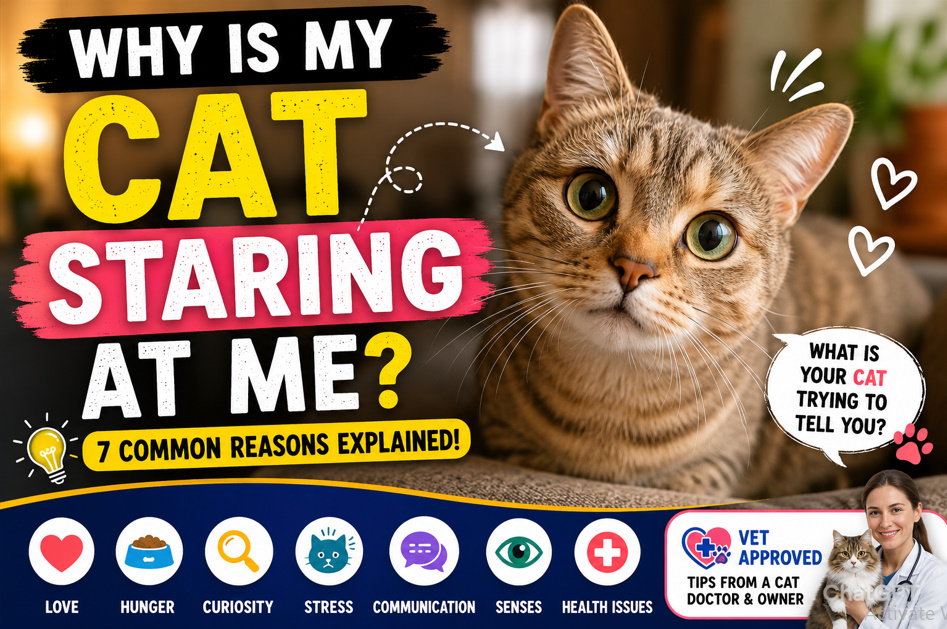
Have you ever looked up and caught your cat staring at you like a tiny furry detective? Cats are mysterious creatures, and their staring behavior can mean many things, from love and hunger to curiosity and health concerns. Understanding feline body language helps cat owners strengthen their bond and keep their pets healthy and happy every day.
Your Cat Loves You More Than Treats ❤️🐱
Cats often stare at their favorite humans as a sign of affection and trust. Feline behavior experts explain that eye contact can strengthen the human-cat bond. If your cat slowly blinks while staring, consider it a kitty kiss. As a veterinarian and cat owner, I’ve noticed affectionate cats often gaze lovingly at their owners.
Advice from a Cat Food Specialist & Veterinarian: Ensure your cat receives balanced nutrition because happy and healthy cats display more affectionate behaviors.
Quick Facts
- 👀 Cats stare to show affection.
- ❤️ Slow blinking means love.
- 🐾 Trust leads to eye contact.
- 😺 Happy cats watch owners.
- 🍗 Good nutrition affects behavior.
- 🛋️ Cats enjoy companionship.
- 🏠 Indoor cats stare more.
- 😻 Bonding increases gazing.
- 🐱 Every cat is unique.
- 🎯 Attention-seeking is common.
- ✨ Cats express emotions silently.
- 🥰 Your cat may adore you.
They’re Waiting for Food Time 🍗⏰
Many cats become expert food detectives. If your cat stares near feeding time, they’re probably reminding you of dinner. Cats have excellent internal clocks and rarely forget meals. During my veterinary practice, many owners reported “judgmental stares” exactly one hour before mealtime.
Advice from a Cat Food Specialist & Veterinarian: Feed high-quality cat food on a regular schedule to support digestive health.
Quick Facts
- 🍽️ Cats remember schedules.
- ⏰ Mealtime matters greatly.
- 👀 Food motivates staring.
- 🐟 Wet food excites cats.
- 😹 Hungry cats become dramatic.
- 🍗 Treats increase attention.
- 🐾 Feeding routines help.
- 😺 Healthy diets matter.
- 🏠 Indoor cats anticipate meals.
- 🎯 Staring means expectation.
- 😻 Cats love consistency.
- 😂 They act like tiny bosses.
Curiosity Turned On: Cat Detective Mode 🕵️♂️🐱
Cats are naturally curious creatures. Your movements, sounds, and routines fascinate them. Feline psychology suggests cats observe humans to understand their environment. As both a veterinarian and cat owner, I’ve seen cats stare intensely at owners doing the simplest tasks, like folding laundry.
Advice from a Cat Food Specialist & Veterinarian: Provide enrichment toys and interactive feeding puzzles to stimulate your cat’s mind.
Quick Facts
- 🕵️ Cats love investigating.
- 👀 Humans are interesting.
- 🧠 Cats enjoy mental stimulation.
- 🎾 Toys reduce boredom.
- 🐾 Curiosity is natural.
- 🏠 Indoor cats observe more.
- 😺 Exploration is healthy.
- 🎯 Movement grabs attention.
- ✨ Cats study routines.
- 🛋️ New objects excite them.
- 😻 Observation builds confidence.
- 😂 You’re their favorite TV show.
Your Cat Wants Attention 🎭🐾
Sometimes staring simply means, “Human, entertain me!” Cats may seek playtime, cuddles, or interaction. In my experience as a veterinarian, attention-seeking behavior is especially common among intelligent breeds and young cats that crave stimulation.
Advice from a Cat Food Specialist & Veterinarian: Schedule daily play sessions to improve your cat’s physical and mental health.
Quick Facts
- 🎾 Cats need playtime.
- 👀 Staring seeks interaction.
- 😺 Social cats stare more.
- 🐾 Attention improves wellbeing.
- 🛋️ Play prevents boredom.
- 🧶 Toys encourage exercise.
- 🏠 Indoor cats need stimulation.
- ❤️ Bonding strengthens relationships.
- 🎯 Interactive games help.
- 😻 Cats enjoy routines.
- ✨ Engagement reduces stress.
- 😂 Your cat hired you.
They Are Reading Your Body Language 📖🐱
Cats are experts at observing human emotions and routines. They may stare to understand your mood or predict your actions. I’ve personally noticed my own cat staring intensely whenever I prepare to leave the house.
Advice from a Cat Food Specialist & Veterinarian: Maintain a stress-free environment because cats are sensitive to emotional changes.
Quick Facts
- 👀 Cats read emotions.
- 🐾 They notice routines.
- ❤️ Mood affects cats.
- 🏠 Stable homes help.
- 😺 Cats observe carefully.
- 🎯 Predictable schedules matter.
- ✨ Behavior reflects feelings.
- 🛋️ Calm environments reduce stress.
- 🧠 Cats are intelligent.
- 😻 Emotional bonds grow.
- 🐱 They know your habits.
- 😂 You aren’t hiding anything.
Your Cat Is Guarding You 🛡️🐱
Some cats behave protectively toward their favorite people. Staring may simply mean they are monitoring your safety. During my years of veterinary practice, I’ve seen many cats sit quietly and watch over sleeping owners.
Advice from a Cat Food Specialist & Veterinarian: Support overall health with species-appropriate nutrition and regular veterinary checkups.
Quick Facts
- 🛡️ Cats can protect owners.
- 👀 Monitoring is normal.
- ❤️ Strong bonds matter.
- 🐾 Loyalty surprises owners.
- 😺 Cats feel secure nearby.
- 🏠 Familiar spaces comfort cats.
- 🎯 Observation is instinctive.
- 🧠 Cats stay alert.
- 😻 Attachment grows over time.
- ✨ Security reduces anxiety.
- 🐱 Family matters to cats.
- 😂 Tiny bodyguard activated.
Your Cat May Feel Bored 😴🐾
Bored cats often stare because they lack stimulation. Without enrichment, indoor cats may watch humans for entertainment. As a cat owner, I noticed increased staring behavior when toys were not rotated regularly.
Advice from a Cat Food Specialist & Veterinarian: Offer scratching posts, climbing trees, and puzzle feeders to prevent boredom.
Quick Facts
- 🧶 Boredom causes staring.
- 🏠 Indoor cats need activities.
- 🎾 Rotate toys weekly.
- 🐾 Climbing improves fitness.
- 😺 Enrichment boosts happiness.
- 🧠 Mental exercise matters.
- 🎯 Puzzle feeders help.
- ❤️ Active cats thrive.
- ✨ Variety keeps interest.
- 🛋️ Environment shapes behavior.
- 😻 Stimulation reduces stress.
- 😂 Become their entertainment director.
They Hear or Sense Something You Can’t 👂🐱
Cats possess exceptional hearing and senses. Sometimes they’re staring beyond you at sounds or movements humans cannot detect. During veterinary visits, owners often worry unnecessarily when cats are simply responding to hidden stimuli.
Advice from a Cat Food Specialist & Veterinarian: Monitor unusual behavior changes and consult your veterinarian if concerns persist.
Quick Facts
- 👂 Cats hear tiny sounds.
- 👀 They detect movement.
- 🐾 Senses are powerful.
- 🏠 Hidden noises attract attention.
- 😺 Cats remain alert.
- 🎯 Hunting instincts persist.
- 🧠 Their senses amaze us.
- ✨ Observation ensures safety.
- ❤️ Curiosity drives behavior.
- 🐱 They notice everything.
- 😻 Instincts stay strong.
- 😂 Ghost hunter mode activated.
They Are Communicating Without Words 🗣️🐾
Cats use body language instead of speech. Staring combines with tail movements, ear positions, and vocalizations to communicate feelings. In veterinary medicine, understanding feline communication greatly improves pet care and strengthens relationships.
Advice from a Cat Food Specialist & Veterinarian: Learn feline body language to better understand your cat’s needs.
Quick Facts
- 👀 Eyes communicate emotions.
- 🐾 Tail position matters.
- 😺 Ears reveal feelings.
- ❤️ Communication builds trust.
- 🏠 Observe daily behavior.
- 🎯 Context is important.
- 🧠 Cats speak silently.
- ✨ Body language matters.
- 😻 Understanding reduces stress.
- 🐱 Every signal counts.
- 🛋️ Observe patterns carefully.
- 😂 Your cat has opinions.
Could It Be a Health Problem? 🏥🐱
Occasionally, unusual staring can indicate medical issues such as vision problems, cognitive dysfunction, or neurological disorders. In my veterinary experience, persistent staring combined with other symptoms deserves professional evaluation.
Advice from a Cat Food Specialist & Veterinarian: Schedule regular veterinary checkups and seek medical advice if behavior changes suddenly.
Quick Facts
- 🏥 Health affects behavior.
- 👀 Vision changes matter.
- 🐾 Monitor unusual signs.
- 😺 Early detection helps.
- ❤️ Preventive care saves lives.
- 🧠 Neurological issues exist.
- 🎯 Sudden changes matter.
- 🏠 Observe daily routines.
- ✨ Wellness exams help.
- 😻 Healthy cats act normally.
- 🐱 Consult professionals promptly.
- 😂 Better safe than sorry.
Conclusion 🐾
If your cat keeps staring at you, don’t worry—you’re probably not being judged for singing badly or eating snacks alone! Most cat staring behavior reflects affection, curiosity, hunger, or communication. However, sudden or unusual staring accompanied by other symptoms may require veterinary attention. Understanding feline behavior strengthens your bond and helps your furry companion live happily.