
Introduction
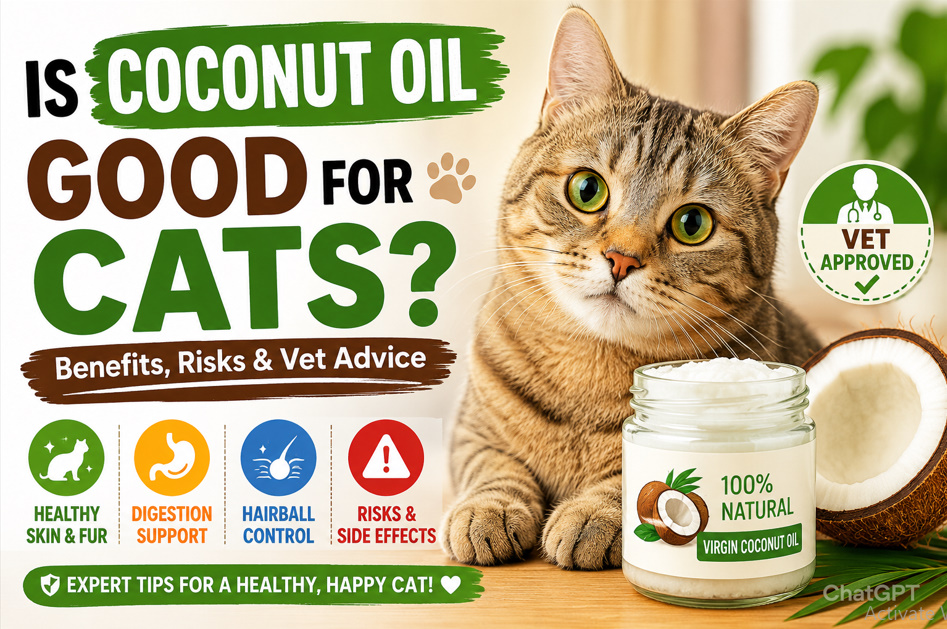
Many cat owners ask, “Is coconut oil good for cats?” Coconut oil has gained popularity for improving skin health, digestion, and coat shine in pets. However, not every cat reacts the same way. Understanding its benefits, risks, and proper use can help you make safe decisions for feline wellness, nutrition, and overall cat health.
What Is Coconut Oil and Why Do Cat Owners Use It?
Coconut oil contains medium-chain triglycerides (MCTs), lauric acid, and healthy fats that may support feline skin health and coat condition. Many pet parents use it for dry skin, hairballs, and digestive support. While some cats benefit, excessive amounts may lead to obesity or stomach upset in sensitive felines.
Cat Food Specialist & Vet Advice: Always introduce coconut oil gradually and consult your veterinarian before adding supplements to your cat’s diet.
My Experience: As a cat owner and veterinarian, I once treated a cat with flaky skin that improved after controlled coconut oil use.
- 🐱 Coconut oil contains MCTs.
- ✨ It may improve coat shine.
- 🩺 Consult your vet first.
- 🌿 Natural oils support skin.
- 🥥 Use organic coconut oil.
- ⚖️ Avoid excessive amounts.
- 🐾 Cats have unique needs.
- 🍽️ Introduce slowly.
- 🚫 Too much causes diarrhea.
- 😺 Some cats enjoy the taste.
- 💧 Helps with dry skin.
- ❤️ Moderation is essential.
Is Coconut Oil Safe for Cats to Eat?
Most healthy cats can consume small amounts of coconut oil safely. However, because cats are obligate carnivores, fats should not replace balanced feline nutrition. Excessive intake may contribute to pancreatitis, weight gain, or digestive issues. Always monitor your cat for adverse reactions after introducing new foods.
Cat Food Specialist & Vet Advice: Start with only a tiny amount—about ¼ teaspoon for adult cats.
My Experience: I observed a cat develop mild diarrhea after excessive coconut oil supplementation.
- 🥥 Small amounts are safer.
- 🐱 Monitor your cat closely.
- ⚠️ Too much causes problems.
- 🍽️ Cats need meat proteins.
- 💊 Supplements require caution.
- 🩺 Veterinary guidance matters.
- 🚫 Avoid daily overfeeding.
- ⚖️ Balance is important.
- 😺 Every cat differs.
- 💧 Fresh water is essential.
- 🐾 Watch digestion carefully.
- ❤️ Use responsibly.
Can Coconut Oil Improve a Cat’s Skin and Coat?
Coconut oil may help relieve dry skin, itching, and dull fur due to its moisturizing properties. Some pet owners apply it topically for dermatitis and skin irritation. However, excessive licking can cause stomach upset. Scientific evidence remains limited, though many owners report positive results.
Cat Food Specialist & Vet Advice: Test a small skin area first before applying broadly.
My Experience: One long-haired cat showed improved coat shine after topical application.
- ✨ Enhances coat appearance.
- 🐱 Moisturizes dry skin.
- 🌿 Contains healthy fats.
- 🩺 Check for allergies.
- 🚫 Avoid overapplication.
- 🧴 Apply sparingly.
- 😺 Monitor licking behavior.
- 🐾 Skin health matters.
- 💧 Hydration supports fur.
- ❤️ Groom regularly.
- 🥥 Natural remedy option.
- ⚠️ Watch for reactions.
Does Coconut Oil Help With Hairballs in Cats?
Some cat owners use coconut oil as a natural hairball remedy because lubrication may help fur pass through the digestive tract. While it may reduce hairball formation in some felines, brushing and proper nutrition remain more effective long-term strategies for hairball control.
Cat Food Specialist & Vet Advice: Combine coconut oil with regular grooming rather than relying on it alone.
My Experience: Frequent brushing reduced hairballs more effectively than oil supplements.
- 🐾 Hairballs are common.
- 🥥 Oil may aid passage.
- ✨ Grooming is essential.
- 🐱 Long-haired cats need care.
- 💧 Hydration helps digestion.
- 🍽️ Fiber supports gut health.
- 🩺 Seek vet advice.
- 🚫 Avoid overfeeding oil.
- ❤️ Brush regularly.
- 😺 Healthy diets matter.
- 🌿 Natural solutions exist.
- ⚖️ Balance is key.
Can Coconut Oil Help Cats With Constipation?
Coconut oil may act as a mild lubricant for some constipated cats. However, constipation can signal underlying health conditions such as dehydration or gastrointestinal disease. Owners should not rely solely on home remedies without veterinary evaluation if symptoms persist.
Cat Food Specialist & Vet Advice: Persistent constipation always requires veterinary assessment.
My Experience: Hydration and dietary adjustments often worked better than coconut oil alone.
- 💧 Water prevents constipation.
- 🥥 Oil may lubricate.
- 🐱 Observe litter box habits.
- ⚠️ Chronic issues need care.
- 🩺 Vet visits matter.
- 🍽️ Fiber aids digestion.
- ❤️ Healthy guts thrive.
- 🐾 Monitor stool quality.
- 🚫 Avoid self-medication.
- 😺 Encourage hydration.
- 🌿 Natural support helps.
- ⚖️ Use moderation.
Are There Any Risks of Coconut Oil for Cats?
Despite its benefits, coconut oil may trigger digestive upset, obesity, or pancreatitis in sensitive cats. Cats with liver disease or fat metabolism disorders require special caution. Not every feline tolerates coconut oil equally, making observation and veterinary consultation essential.
Cat Food Specialist & Vet Advice: Stop use immediately if vomiting or diarrhea occurs.
My Experience: A senior cat experienced stomach upset after consuming too much oil.
- ⚠️ Watch for vomiting.
- 🚫 Excess causes obesity.
- 🩺 Health checks matter.
- 🐱 Sensitive cats vary.
- 🥥 Introduce slowly.
- 💧 Ensure hydration.
- 🍽️ Maintain balanced nutrition.
- ❤️ Safety first.
- 🐾 Monitor appetite.
- 😺 Individual responses differ.
- 🌿 Natural isn’t always safe.
- ⚖️ Use carefully.
How Much Coconut Oil Can Cats Have?
Dosage depends on body weight, age, and health status. Most veterinarians recommend starting with a very small amount and increasing cautiously if tolerated. Moderation prevents digestive upset while allowing potential benefits for feline wellness and coat health.
Cat Food Specialist & Vet Advice: Begin with ¼ teaspoon two to three times weekly.
My Experience: Smaller doses consistently produced better outcomes in my patients.
- 🥥 Start very small.
- 🐱 Monitor behavior.
- ⚖️ Weight affects dosage.
- 🩺 Ask your veterinarian.
- 🚫 Avoid daily excess.
- 💧 Keep water available.
- 🍽️ Balanced diets matter.
- ❤️ Observe carefully.
- 🐾 Adjust gradually.
- 😺 Each cat differs.
- 🌿 Quality oil matters.
- ✨ Moderation wins.
Is Coconut Oil Good for Cats With Allergies?
Some owners use coconut oil for environmental allergies and dry skin. Its moisturizing effect may reduce irritation, but it is not a cure for allergic disease. Identifying the underlying allergen remains the most effective treatment for feline allergies.
Cat Food Specialist & Vet Advice: Allergy testing may provide better long-term solutions.
My Experience: Most allergy cases improved after addressing environmental triggers.
- 🌿 Allergies vary widely.
- 🐱 Monitor symptoms.
- ✨ Moisturizes skin.
- 🩺 Seek diagnosis.
- 🚫 Not a cure.
- 💧 Hydration helps.
- 🍽️ Diet influences health.
- ❤️ Healthy skin matters.
- 🐾 Reduce allergens.
- 😺 Observe scratching.
- 🥥 Use cautiously.
- ⚠️ Contact your vet.
Can Coconut Oil Be Applied Topically?
Topical coconut oil is often used for cracked paw pads, dry skin, and mild irritation. While many cats benefit, some dislike the oily texture and may lick excessive amounts. Careful application and monitoring help ensure safe use.
Cat Food Specialist & Vet Advice: Apply thin layers and prevent excessive licking.
My Experience: Paw pad dryness improved significantly in several feline patients.
- 🐾 Helps dry paws.
- 🥥 Apply sparingly.
- ✨ Supports skin moisture.
- 🐱 Watch licking.
- 🩺 Vet guidance helps.
- 🚫 Avoid wounds.
- 💧 Clean skin first.
- ❤️ Observe reactions.
- 😺 Cats groom often.
- 🌿 Natural moisturizer.
- ⚠️ Stop if irritated.
- 🍽️ External use only.
Final Verdict: Is Coconut Oil Good for Cats?
Coconut oil can provide benefits for skin health, coat shine, and hairball management when used appropriately. However, it is not essential for feline nutrition and should never replace a balanced diet. Responsible use, veterinary guidance, and careful observation ensure your cat’s safety and well-being.
Cat Food Specialist & Vet Advice: Coconut oil is best used as an occasional supplement—not a cure-all.
My Experience: Cats respond differently, so personalized care always delivers the best results.
- 🐱 Cats have unique needs.
- 🥥 Coconut oil has benefits.
- ⚠️ Risks also exist.
- 🩺 Veterinary advice matters.
- ✨ Healthy coats shine.
- 💧 Hydration is key.
- 🍽️ Nutrition comes first.
- ❤️ Safety always matters.
- 🐾 Monitor reactions.
- 😺 Use responsibly.
- 🌿 Natural remedies help.
- ⚖️ Moderation is best.
Conclusion
Coconut oil can be beneficial for some cats when used properly and in moderation. It may support skin health, coat quality, and hairball management. However, excessive use can lead to digestive problems or weight gain. Always prioritize balanced feline nutrition and seek veterinary guidance before introducing coconut oil into your cat’s routine.