
Introduction
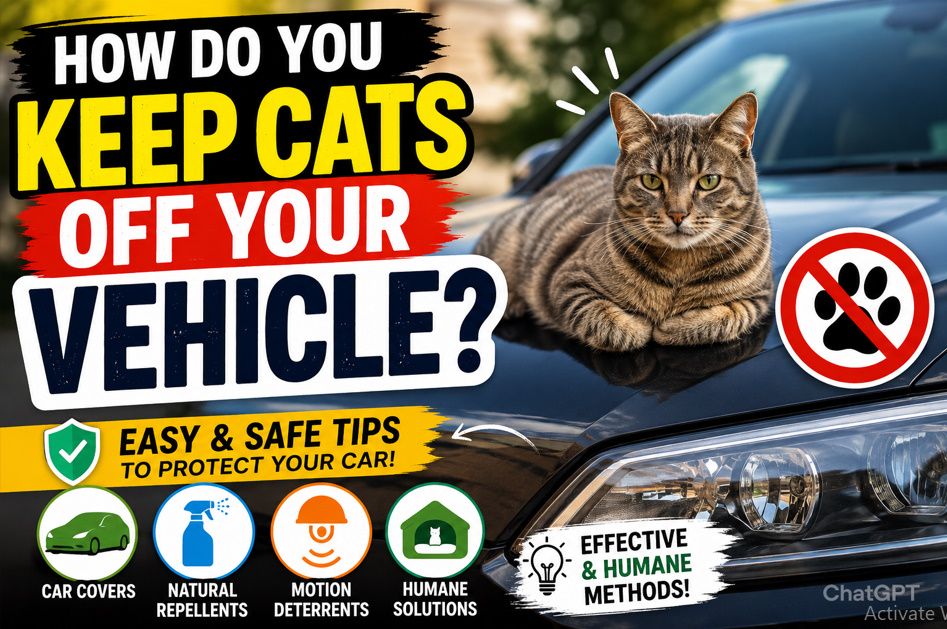
Cats often climb onto vehicles because they seek warmth, shelter, and elevated resting spots. While adorable, their paws and claws can leave scratches, fur, and muddy prints on your car. As a cat owner, I have experienced finding paw marks on my freshly washed vehicle many times. Fortunately, there are humane and effective ways to discourage cats from using your vehicle as their favorite resting place.
Use a Car Cover to Protect Your Vehicle
A high-quality car cover acts as a physical barrier against cat scratches, paw prints, and fur. Cats prefer smooth and warm surfaces, but covers reduce their interest in climbing. As a cat owner, I noticed fewer cats visiting my car after regularly using a durable cover. It also protects against dust and weather damage.
- 🚗 Car covers prevent scratches.
- 🐱 Cats dislike unstable surfaces.
- 🌞 Covers reduce heat attraction.
- 🛡️ Protects paint from damage.
- 🌧️ Shields against weather.
- ✨ Keeps vehicles cleaner.
- 🐾 Reduces paw prints.
- 🔒 Easy to install daily.
Advice: Choose a waterproof and breathable car cover for maximum protection.
Park in a Garage Whenever Possible
Indoor parking is one of the most reliable ways to keep cats away from vehicles. Garages eliminate access and reduce exposure to neighborhood cats. In my experience, moving the car into the garage immediately stopped nighttime cat visits and prevented unexpected scratches.
- 🏠 Garages block cat access.
- 🚗 Cars stay cleaner indoors.
- 🐾 Prevents paw marks.
- 🌙 Reduces nighttime visits.
- 🔒 Adds extra security.
- 🌧️ Protects from weather.
- 🛡️ Prevents paint damage.
- ✨ Keeps vehicles spotless.
Advice: Keep garage doors closed to prevent curious cats from entering.
Use Safe Cat Repellent Scents
Cats dislike certain smells such as citrus, vinegar, and peppermint. Applying pet-safe repellents around parking areas can discourage cats. I once placed citrus peels near my parking spot and noticed fewer feline visitors within days.
- 🍋 Cats dislike citrus smells.
- 🌿 Peppermint may deter cats.
- 🧴 Use pet-safe repellents.
- 🐱 Avoid harmful chemicals.
- 🚗 Protect parking spaces.
- 🌱 Natural options exist.
- ✨ Easy to apply.
- 🛡️ Reduces cat activity.
Advice: Never spray repellents directly on cats or your vehicle.
Install Motion-Activated Sprinklers
Motion-activated sprinklers gently scare cats without harming them. These devices detect movement and release water. As a cat owner, I found this method highly effective for keeping neighborhood cats away from outdoor parking areas.
- 💧 Sprinklers activate automatically.
- 🐱 Cats dislike sudden water.
- 🌿 Safe and humane.
- ⚡ Works instantly.
- 🚗 Protects parking spaces.
- 🌞 Suitable outdoors.
- 🛡️ Prevents repeated visits.
- ✨ Low maintenance.
Advice: Position sprinklers near your parking area for best results.
Place Textured Mats Near the Vehicle
Cats avoid walking on uncomfortable surfaces. Textured mats or plastic runners with raised bumps discourage climbing. I tested this around my driveway, and cats quickly lost interest in approaching the car.
- 🐾 Cats dislike rough textures.
- 🚗 Protects parked cars.
- 🛡️ Humane deterrent.
- ✨ Easy to install.
- 🌿 Reusable material.
- 🏠 Works in driveways.
- 🐱 Discourages climbing.
- 💰 Cost-effective solution.
Advice: Use weather-resistant mats for outdoor durability.
Remove Food Sources Around Your Home
Food attracts cats to your property. Secure trash bins and avoid leaving pet food outdoors. Once I removed leftover food from my yard, the number of visiting cats decreased dramatically.
- 🍽️ Food attracts cats.
- 🗑️ Secure garbage bins.
- 🐾 Reduce animal traffic.
- 🏠 Keep yards clean.
- 🚫 Avoid feeding strays.
- 🌿 Prevent repeat visits.
- ✨ Easy prevention.
- 🛡️ Supports long-term results.
Advice: Eliminate attractants to naturally reduce cat activity.
Use Ultrasonic Cat Deterrents
Ultrasonic devices emit sounds that deter cats while remaining mostly inaudible to humans. Many homeowners use them successfully. I installed one near my driveway and noticed fewer cats around my vehicle.
- 🔊 Emits deterrent sounds.
- 🐱 Targets feline hearing.
- 🚗 Protects vehicles.
- 🌿 Humane technology.
- ⚡ Automatic operation.
- 🛡️ Long-lasting effect.
- ✨ Low maintenance.
- 🏠 Suitable outdoors.
Advice: Place the device where cats commonly approach.
Create Alternative Resting Areas
Providing cats with attractive resting spots can redirect them away from vehicles. Neighborhood cats often prefer comfortable alternatives. After placing an outdoor cat shelter, fewer cats climbed on my car.
- 🏠 Offer cat shelters.
- 🐱 Redirect behavior.
- 🌞 Warm spaces attract cats.
- 🚗 Protect your vehicle.
- 🌿 Humane solution.
- ✨ Encourages relocation.
- 🐾 Reduces climbing.
- ❤️ Supports animal welfare.
Advice: Position resting areas away from parked vehicles.
Keep Your Vehicle Clean
Cats are attracted to lingering scents left by other animals. Regular washing removes odors and reduces attraction. I noticed cleaner cars attracted fewer curious cats over time.
- 🚗 Wash regularly.
- 🧼 Remove odors.
- 🐱 Reduce attraction.
- ✨ Maintain appearance.
- 🛡️ Protect paint.
- 🌿 Easy habit.
- 🐾 Less animal interest.
- 🌞 Improves longevity.
Advice: Use pet-safe cleaning products for best results.
Use Reflective Objects as Deterrents
Reflective tape or shiny objects can make cats feel uncomfortable approaching. Moving reflections often discourage exploration. This simple trick worked surprisingly well in my driveway.
- ✨ Reflective surfaces deter cats.
- 🌞 Sunlight enhances effect.
- 🐱 Creates uncertainty.
- 🚗 Protects vehicles.
- 🛡️ Non-harmful method.
- 💰 Affordable solution.
- 🌿 Easy setup.
- 🔄 Works continuously.
Advice: Rotate reflective items occasionally to maintain effectiveness.
Avoid Warming the Car Unnecessarily
Warm engines attract cats, especially during cooler months. Cats seek heat for comfort and safety. I always check under the hood before driving after discovering a cat sleeping near the engine.
- 🔥 Warm engines attract cats.
- 🐱 Cats seek heat.
- 🚗 Inspect before driving.
- 🛡️ Prevent accidents.
- 🌙 Common in winter.
- ✨ Simple habit.
- 🐾 Protects animals.
- ❤️ Promotes safety.
Advice: Tap the hood before starting the engine to alert hidden cats.
Be Patient and Consistent
Changing cat behavior takes time and consistency. Combining several humane methods usually produces the best results. Through experience, I learned that persistence works better than temporary solutions.
- ⏳ Behavior changes slowly.
- 🐱 Cats form habits.
- 🚗 Protect your vehicle.
- 🌿 Use humane methods.
- 🛡️ Combine strategies.
- ✨ Stay consistent.
- ❤️ Respect animals.
- 🏠 Create boundaries.
Advice: Avoid harmful deterrents and prioritize animal welfare.
Conclusion
Keeping cats off your vehicle requires patience, consistency, and humane strategies. Methods such as car covers, safe repellents, motion sprinklers, and alternative resting spaces can effectively discourage feline visitors. As a cat owner, I understand the challenge of balancing vehicle protection with animal welfare. By using cat-friendly deterrents, you can protect your car while treating cats with kindness and respect.